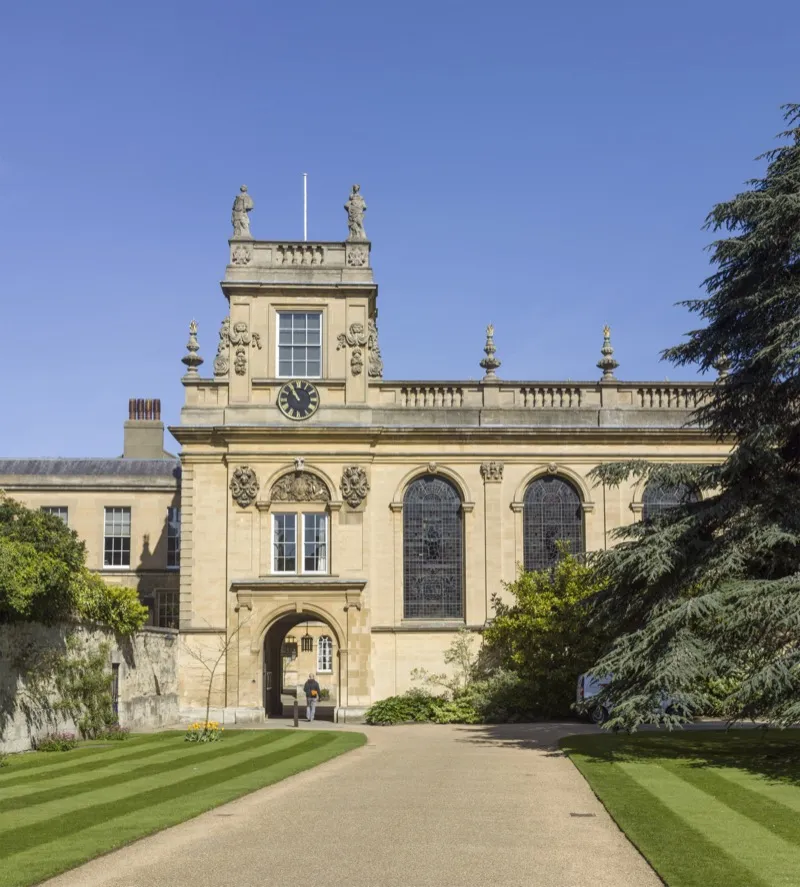
Trinity College
Spacious gardens and a Wren chapel on Broad Street — often overlooked
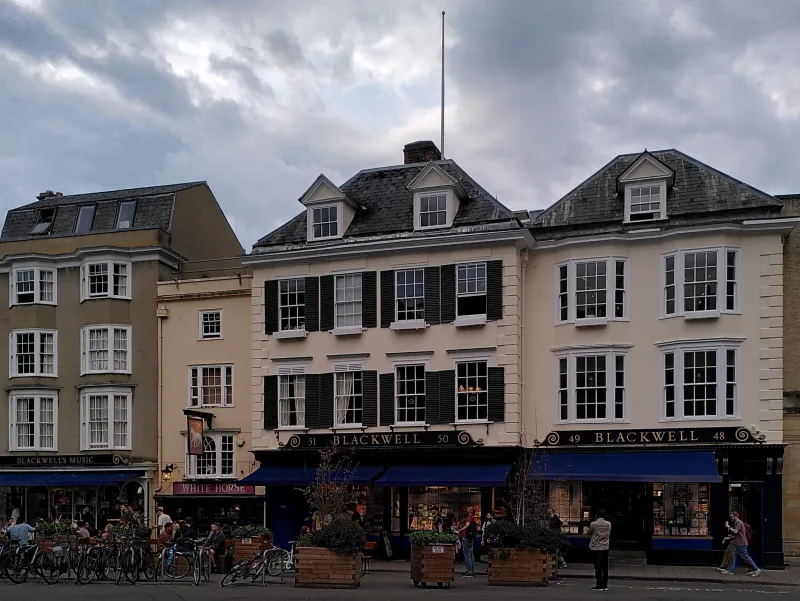
Trinity is one of Oxford's most underrated colleges — right on Broad Street, sandwiched between Blackwell's bookshop and Balliol, but overlooked by visitors heading for the Bodleian or the Sheldonian. That's a mistake. The gardens, stretching all the way back to Parks Road, are large and well maintained, and the chapel is a fine baroque interior, with limewood carvings by Grinling Gibbons (or his workshop) and a painted ceiling.
Founded in 1555 by Sir Thomas Pope on the site of the medieval Durham College (a Benedictine monks' hostel), Trinity has a front quad that opens onto Broad Street with an iron gate that lets you peek in even when the college is closed. The garden quad behind is peaceful, and the path through the gardens to the back gate is one of Oxford's most pleasant short walks. The college is small — about 300 students — and has an understated, well-mannered character that contrasts with the wealth and swagger of neighbouring St John's.
What makes it special
The chapel is the main draw. The carved reredos (altar screen) and the cedar stalls are fine examples of late 17th-century craftsmanship, and the painted ceiling adds to the effect. The gardens, running north from the college in a long strip, are unusually large for a central college — mature trees, rolling lawns, and a sense of space that most Broad Street visitors never suspect exists behind the facade.
Visitor info
Trinity is on Broad Street, next to Blackwell's. The college charges a small admission fee and opens at published times — check the college website for details. The chapel and gardens are the priorities; allow 20-30 minutes. The Broad Street facade is visible and photogenic even when the college is closed. This is an easy add to any Broad Street circuit (Bodleian, Sheldonian, Weston Library).
Nearby
Within a few minutes' walk