Balliol College
One of Oxford's oldest colleges — plain outside, historically significant inside
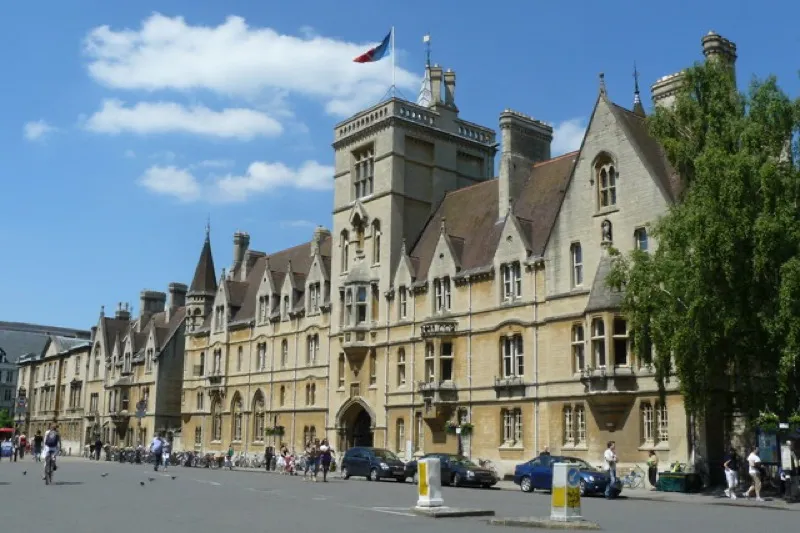
Balliol's reputation rests on brains, not beauty. It claims to be Oxford's oldest college (Merton and University College dispute this, and the argument will never be settled), and it has produced more prime ministers, more Nobel laureates, and more leading public intellectuals than arguably any other institution in the country. The architecture is modest, mostly Victorian rebuilds that lack the grandeur of Christ Church or the period charm of Merton. But Balliol's power was always in its people, not its buildings, and if you care about intellectual history, this is hallowed ground.
What to look for
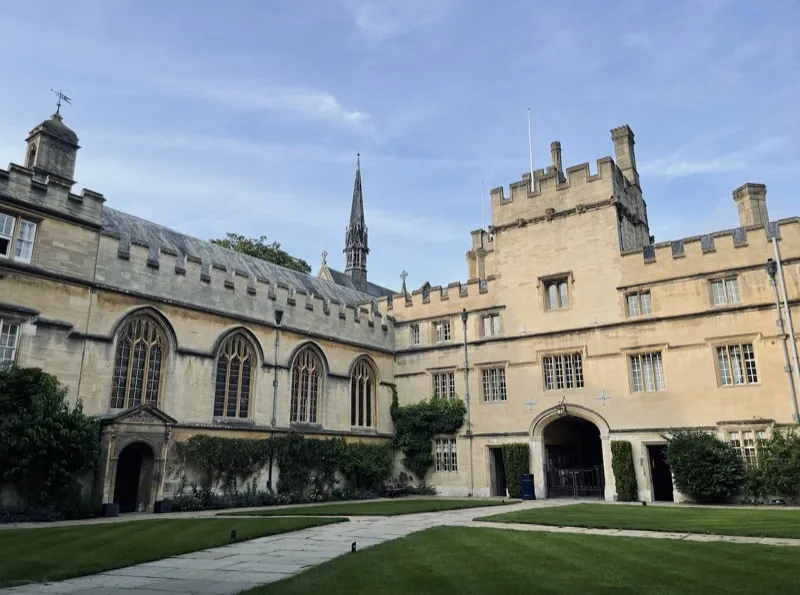
- The Front Quad and the Martyrs' Memorial connection — The front quad is plain but historically loaded. The cross in the road outside Balliol (on Broad Street) marks the approximate spot where Cranmer, Latimer, and Ridley were burned at the stake. The college's wooden door supposedly still bears scorch marks from those fires, though this is almost certainly a myth that Balliol enjoys not correcting.
- The Garden Quad — Walk through to the back and things improve considerably. The garden quad is surprisingly tranquil, and the college gardens stretch further than you'd expect from the modest Broad Street frontage.
- The Hall — Less spectacular than Christ Church or Magdalen, but the portraits include political and intellectual heavyweights. Look for the painting of Adam Smith, who studied here and hated it (he called the professors idle).
Visiting
Balliol sits right on Broad Street, opposite the Bodleian, making it easy to combine with other visits. Check the college website for opening times. Access is relatively straightforward and often free. Don't expect visual fireworks, but do read the memorial plaques. The history here is staggering even by Oxford standards.
Famous alumni & fellows
Notable Oxford figures associated with Balliol College.
Nearby
Within a few minutes' walk