Christ Church Cathedral
Among the smallest cathedrals in England, and the only one that is also a college chapel. Norman bones, a 14th-century Becket window that survived the Reformation, and five Burne-Jones windows.
Come for a service and entry is free: use the Christ Church Meadow gate and tell the stewards you’re attending. Evensong is sung most term-time evenings; check the cathedral website for times. Daytime sightseeing is via the ticketed college visitor route.
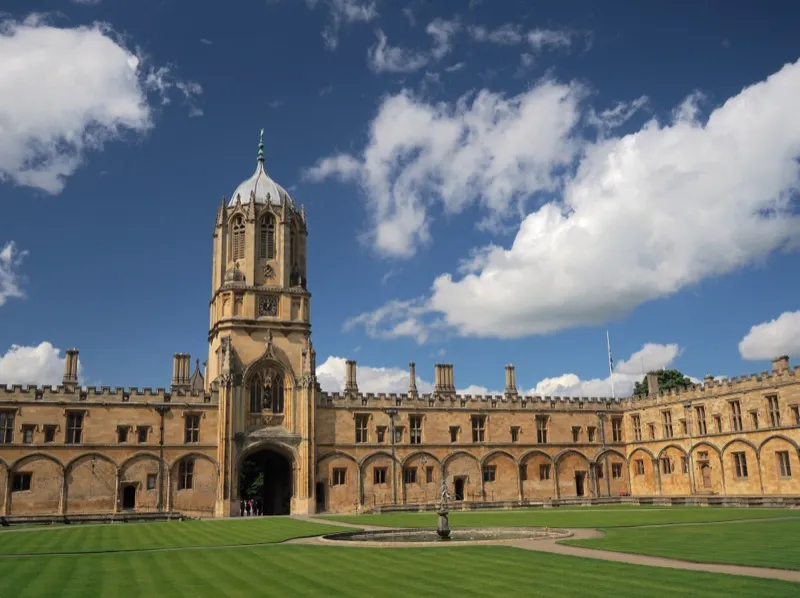
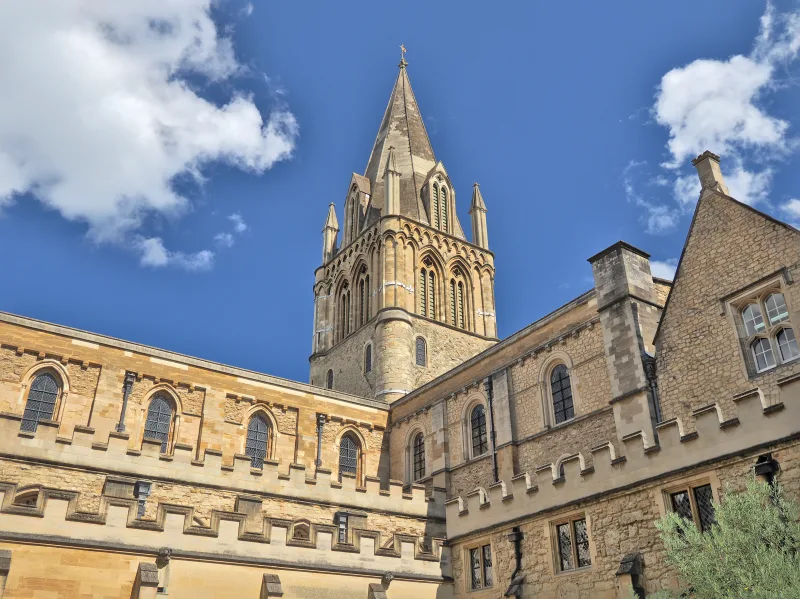
Christ Church Cathedral is the cathedral of the Church of England diocese of Oxford and, in the same building, the chapel of Christ Church college — a dual role that is unique in the Church of England. It is also one of the smallest cathedrals in the Church of England, which gives it the unusual feel of a parish church carrying diocesan weight.
From Frideswide's priory to Henry VIII's cathedral
The cathedral was originally the church of St Frideswide's Priory, on the site historically presumed to be the location of the nunnery founded by Frideswide, the patron saint of Oxford. The first church here was burnt during the St Brice's Day massacre in 1002, and the site was re-founded as a priory of Augustinian canons by 1122.
The priory was suppressed in 1524 by Cardinal Thomas Wolsey, who intended to demolish the church to make room for a new college. When Wolsey fell from favour in 1529 the project was taken over by Henry VIII, who preserved the church. In 1546 Henry VIII transferred to it the recently created See of Oxford from Osney Abbey — and so the priory church, the college chapel, and the diocesan cathedral became one building.
What to look at
The nave, choir, main tower and transepts are late Norman, with architectural features running through to the Perpendicular style; the large rose window in the east end is a ten-part botanical type. The oldest piece of stained glass is the 14th-century Becket Window in the Lucy Chapel — one of very few images of Thomas Becket to survive the Reformation; the saint's face was deliberately defaced but the surrounding panels were left intact. From the late 19th century, look for the five windows by Morris & Co designed by Edward Burne-Jones.
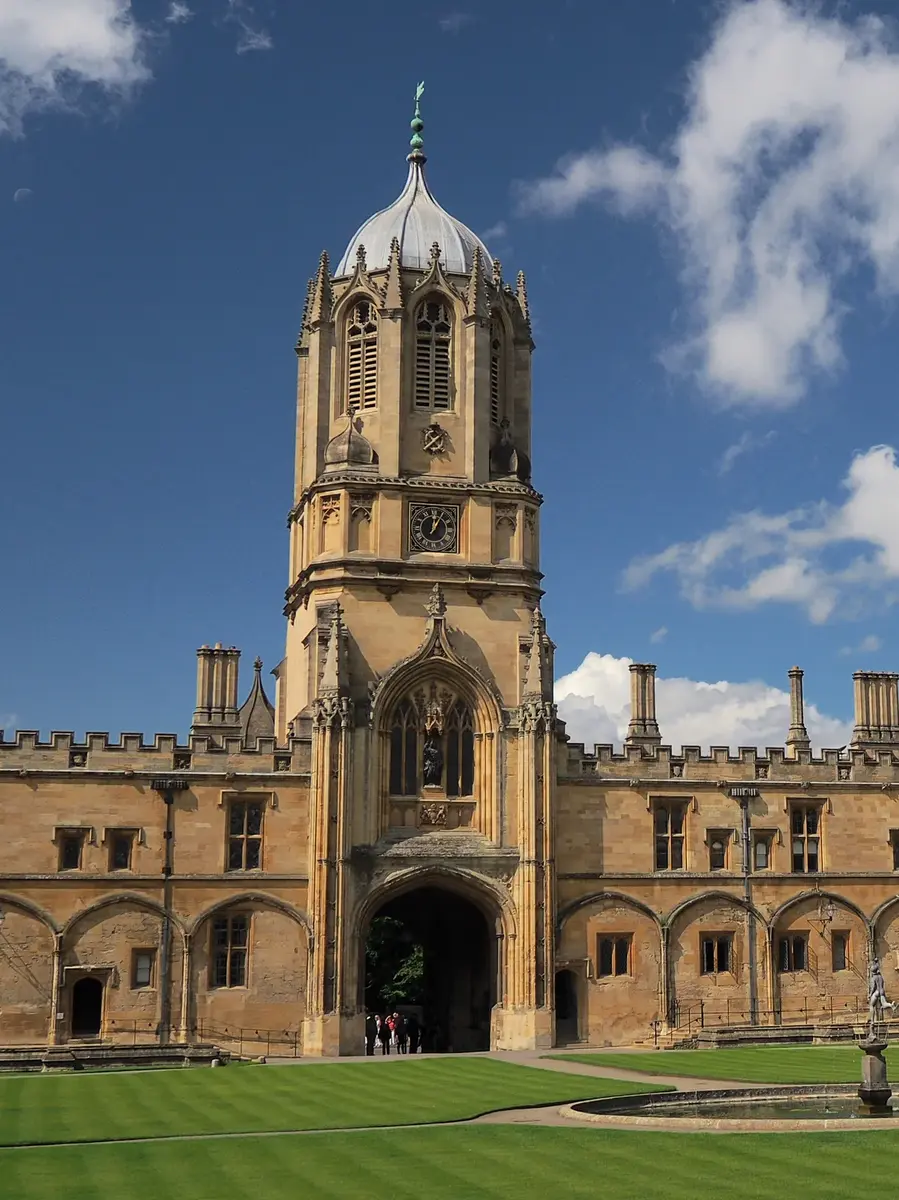
The bourdon bell hanging above the cathedral is Great Tom, cast in 1680. It is rarely swung but is sounded every night.
Music
There has been a choir at the cathedral since 1526, when John Taverner was appointed organist and master of the choristers by Wolsey. The choral foundation has been continuous since. John Wesley and Charles Wesley, who later led the Methodist revival, were ordained at Christ Church Cathedral while they were still Anglicans.
Notable burials
Among those buried or commemorated in the cathedral: Robert Burton, author of The Anatomy of Melancholy; and Henry Liddell, Dean of Christ Church and father of Alice Liddell — the model for Alice in Wonderland.
Visiting
What costs what: daytime sightseeing entry is through the Christ Church college visitor route, and the cathedral is included in the college admission ticket — there is no separate cathedral-only ticket. Attending a service, including the sung Evensong, is free: enter via the Meadow gate and tell the stewards you're there for the service.
The cathedral is entered through the Christ Church college visitor route during the day. Service times — including the daily Evensong sung by the cathedral choir in term — are listed on the cathedral website. Tower climbs are not part of the cathedral visit; for a view over the central rooftops the climbable towers are St Mary the Virgin, St Michael at the Northgate and Carfax.
Nearby
Within a few minutes' walk