Godstow Abbey
A Benedictine nunnery founded in 1133 on an island in the Thames; the burial place of Henry II's mistress Rosamund Clifford until a bishop ordered her tomb thrown out of the church in 1191. Suppressed in 1539, ruined in the Civil War, painted by the Pre-Raphaelites, picnicked over by Lewis Carroll.
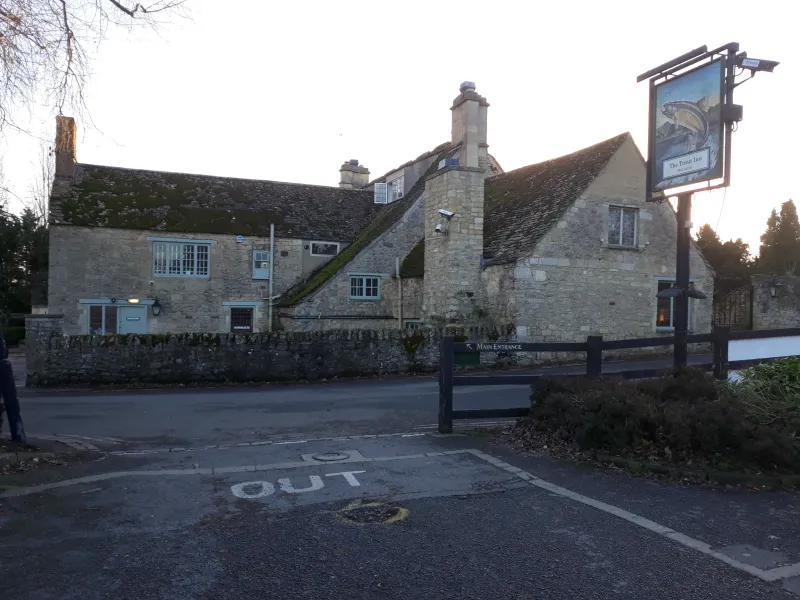
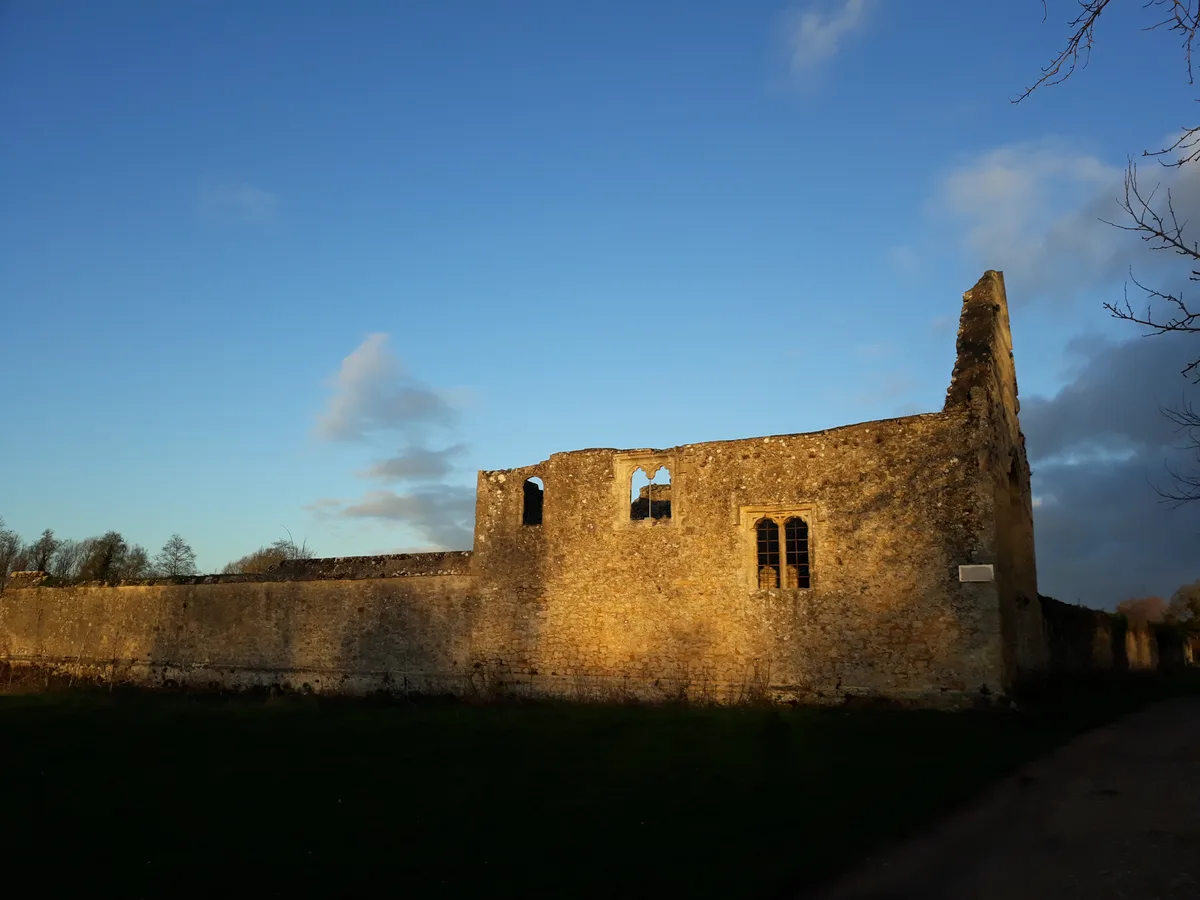
Cross Godstow bridge from The Trout Inn and the ruins are 200 metres along the towpath, low and easy to miss in tall summer grass. The single most evocative time to visit is late afternoon in winter, when the walls cast long shadows across Port Meadow. Combine with a Thames Path walk down to Folly Bridge — the route Lewis Carroll rowed upstream on 4 July 1862 with the Liddell sisters — for the full Alice geography.
The low, broken walls in the meadow opposite The Trout were, for four centuries, a Benedictine nunnery — one of the wealthier women's houses in medieval England, and Oxfordshire's most famously haunted ruin. The story is two stories. The first is about a king's mistress and a bishop who could not stand the sight of her tomb. The second is about a maths don, three little girls, and a boating picnic. Almost everyone who finds Godstow Abbey is following one of those threads.
A nunnery on an island
The site was given in 1133 to a widow named Edith de Launceline, who had been living a quiet religious life alone in the village of Binsey when John of St John handed her enough land to found a community. The original site was an island between two streams running into the Thames; the abbey was built in local limestone in honour of St Mary and St John the Baptist. The church was consecrated in 1139 in the presence of King Stephen. Edith ran the house herself until her death; her cause was supported by Henry I.
Henry II was the great patron. Between 1176 and 1188 he gave the abbey £258, 40,000 shingles, 4,000 laths, and a heap of timber. He had a reason. His long-term mistress, Rosamund Clifford — known across the kingdom as Fair Rosamund — retired to the nunnery at Godstow in 1176 and died there shortly after, aged about thirty. Henry and the Clifford family paid for her tomb in the choir of the convent's church and gave the nuns an endowment to keep candles burning at it. It became a popular shrine. Pilgrims left flowers. Local people prayed there.
In 1191, two years after Henry's own death, Hugh of Lincoln visited Godstow on his rounds as Bishop of Lincoln. He saw a tomb laden with flowers and candles standing in front of the high altar. When he was told whose it was, he was furious. Calling Rosamund a harlot, he ordered her remains taken out of the church to the cemetery beside the chapter house. She could lie there, he said, and the people could still come if they wanted; but he would not have a king's whore in front of the altar.
The relocated tomb survived the Middle Ages. The German traveller Paul Hentzner saw what was left of it around 1599, and copied down the punning Latin epitaph that had been carved on the slab:
Hic jacet in tumba Rosamundi non Rosamunda
Non redolet sed olet, quae redolere solet.
("Here in the tomb lies a rose of the world, not a pure rose; she who used to smell sweet, still smells — but not sweet.")
The tomb was destroyed in the Dissolution. Her grave is somewhere in the grounds, but where, no one now knows.
Suppression, civil war, and ruin
The last abbess of Godstow was Lady Katherine Bulkeley, elected in 1535 at around the age of thirty-five. She was a reformer who corresponded directly with Thomas Cromwell — but in October 1538 Cromwell's suppression commissioner, Dr John London, turned up at the gate with a body of men and demanded access to the enclosed nuns. The letters that survive from the next few weeks show Bulkeley accusing London of using force, and London accusing Bulkeley of personally assaulting him; Cromwell sided with the abbess. He could not, in the end, save the house. The abbey was suppressed in November 1539 under the Second Act of Dissolution. Cromwell ensured that Bulkeley walked away with a generous pension of fifty pounds a year.
The buildings were converted into a private mansion, Godstow House, by George Owen, and his family lived there for the next century. In 1645, during the English Civil War, the house was fortified as part of the Royalist defences of Oxford against the Parliamentary army at the Siege of Oxford — the older Godstow stone bridge had probably been held by the Royalists against Parliament the year before — and was badly damaged in the fighting. After the war it was abandoned. Local people came with carts and took the stones away to build their own houses. By the 19th century it was the picturesque ruin you see now.
The Pre-Raphaelites and the Liddells
In 1862 the Pre-Raphaelite watercolourist George Price Boyce came up the river from Oxford and made a careful study of the ruins. The same summer, on 4 July, Charles Dodgson — Lewis Carroll — rowed up from Folly Bridge with the Reverend Robinson Duckworth and the three Liddell sisters: Lorina, Alice, and Edith. They picnicked here. He told them a story about a girl called Alice. Throughout the late Victorian period, Dodgson kept coming back, with Alice and her sisters, for trips and picnics among the walls. The stones in front of you are a backdrop to the writing of Alice's Adventures in Wonderland. (More recently, the same walls served as a film set for the musical number "When I Kissed The Teacher" in Mamma Mia! Here We Go Again — the abbey has form as a romantic backdrop.)
Visiting
The ruins are on the Thames Path between Godstow Bridge and Port Meadow, a short walk from The Trout Inn at Wolvercote. There is no entrance, no fee, no roof. The site is grazed in summer; expect long grass and cowpats. The walls themselves are no more than waist high in most places — what survives is an outline, not a building. Pair this with a long lunch at the Trout, a wander up the river to the lock, and the route back across Port Meadow for a complete afternoon.