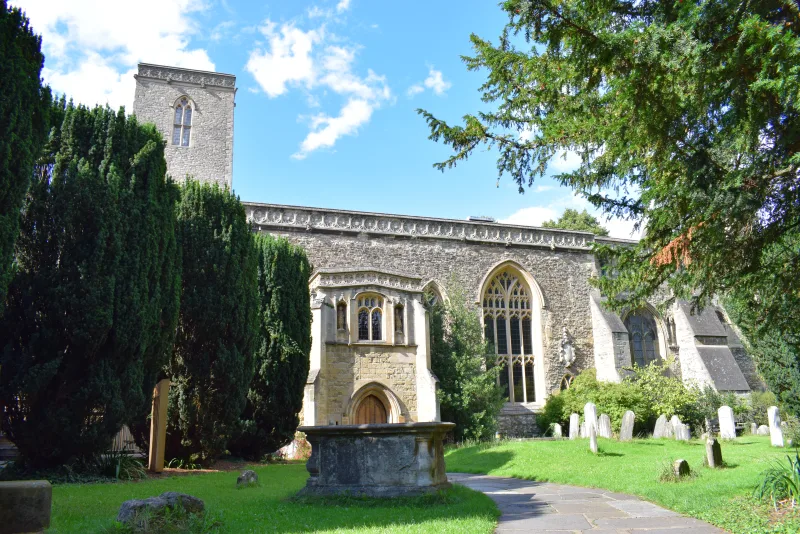
Holywell Cemetery
Victorian cemetery established in 1847 on Merton College land. The resting place of Kenneth Grahame, Walter Pater, Charles Williams and the Mad Hatter's reputed model — now a wildlife refuge with muntjac deer and pheasants.
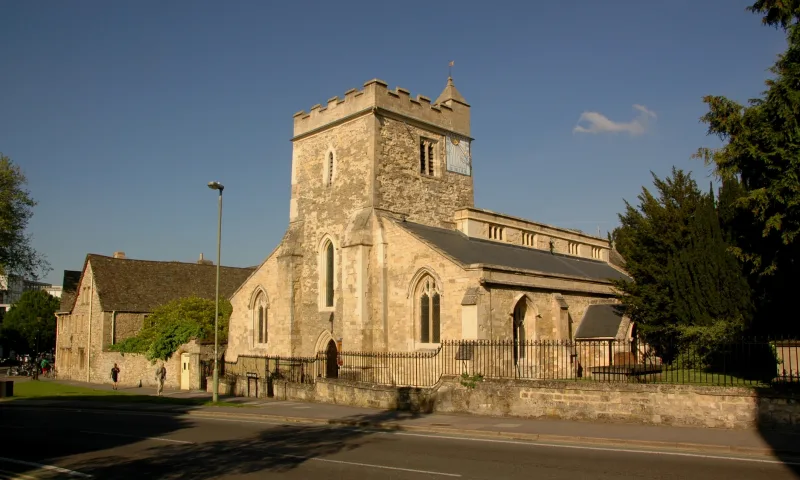
Entry is through the gate by St Cross Church, off St Cross Road. Kenneth Grahame’s grave is on the right of the central path, with a stone bearing a quote from The Wind in the Willows. The cemetery’s wildness is the point — it’s quieter and far less manicured than Wolvercote, and you’ll often see muntjac deer if you arrive at dawn or dusk.
Holywell Cemetery sits tucked behind St Cross Church on St Cross Road, in the old parish of Holywell — Holywell Manor stands just to the north and Longwall Street closes it in to the south. The ground was opened for burials in 1847 after Merton College released part of its holdings to take pressure off the overcrowded parish graveyards inside the medieval city. Two other cemeteries opened on the same plan around the same date: Osney to the west, and St Sepulchre's to the north. By 1855 the city's parish churchyards had been closed to new burials altogether, except where families already held a vault.
A wildlife refuge
The cemetery has been left largely unmanaged for decades and is now a wildlife refuge in the heart of the city. Birds (including resident pheasants), butterflies, foxes, muntjac deer and hedgehogs all live among the Victorian monuments. The Friends of Holywell Cemetery raise funds for upkeep and manage the site, balancing access and conservation against the steady weathering of the older graves.
Notable graves
A remarkable concentration of Victorian and 20th-century Oxford figures is buried at Holywell:
- Kenneth Grahame (1859–1932) — who wrote The Wind in the Willows. The most-visited grave on the site, to the right of the central path.
- Walter Pater (1839–1894) — essayist, critic and aesthete, Fellow of Brasenose.
- Charles Williams (1886–1945) and Hugo Dyson (1896–1975) — both members of the Inklings, alongside Tolkien and Lewis.
- Theophilus Carter (1824–1904) — the Oxford furniture dealer long rumoured to have been Lewis Carroll's model for the Mad Hatter in Alice's Adventures in Wonderland.
- Kenneth Tynan (1927–1980) — theatre critic, author and provocateur.
- Sir Maurice Bowra (1898–1971) — Warden of Wadham and Vice-Chancellor of the university.
- Max Müller (1823–1900) — German-born philologist and Orientalist, Fellow of All Souls.
- John Stainer (1840–1901) — composer and organist.
- Sir Henry Acland (1815–1900) and Lady Sarah Acland — physician and educator; the Acland Home in north Oxford was named for them.
- F. H. Bradley (1846–1924) and A. C. Bradley (1851–1935) — philosopher and literary scholar respectively, both brothers.
- James Blish (1921–1975) — American science-fiction author who settled in Oxford in his last years.
War graves and other memorials
Three Commonwealth War Graves stand inside the cemetery — two army officers killed in 1914-18, and one RAF officer from the Second World War. Mounted on a wall is something rarer: the original wooden grave-marker of the England rugby captain Ronald Poulton-Palmer, killed in action in 1915 and brought back from Ploegsteert Wood in Flanders to the city where he had been an undergraduate.
Frequently asked questions
Where is Holywell Cemetery?
Behind St Cross Church on St Cross Road in central Oxford (postcode OX1 3TU), south of Holywell Manor and north of Longwall Street. The nearest landmark for visitors is the Bridge of Sighs on New College Lane — five minutes' walk east.
Who is buried at Holywell Cemetery?
The best-known grave is that of Kenneth Grahame, who wrote The Wind in the Willows. Others include Walter Pater, Charles Williams and Hugo Dyson (both Inklings), Kenneth Tynan, Maurice Bowra, Max Müller, John Stainer, the Acland family, F. H. and A. C. Bradley, and Theophilus Carter — the Oxford furniture dealer long rumoured to have been Lewis Carroll's model for the Mad Hatter.
Is Holywell Cemetery open to the public?
Yes. There is no admission charge and no booking. The site is open during daylight hours. Because it is also a wildlife refuge, dogs should be kept on leads and visitors are asked not to disturb the wilder corners.
What's the difference between Holywell and Wolvercote Cemeteries?
Holywell is the older (1847), smaller, more atmospheric Victorian cemetery in central Oxford — the resting place of literary and academic figures from Pater to the Inklings. Wolvercote opened in 1889 and is the larger municipal cemetery to the north, best known as the burial place of J.R.R. Tolkien and Roger Bannister.
Nearby
Within a few minutes' walk