The Oxford Union Murals
The Pre-Raphaelite Brotherhood's most famous fiasco — Rossetti, Morris and Burne-Jones painted Arthurian scenes onto the bare brickwork of the Union's debating hall in 1857. The paint started peeling before the work was finished.
In the summer of 1857, Dante Gabriel Rossetti and William Morris came up to Oxford, found the Oxford Union's new debating hall under construction, and persuaded its committee to let them decorate the upper walls and the open-timbered roof with scenes from Malory's Le Morte d'Arthur. The resulting paintings — known ever since as the Oxford Union Murals — are the most famous unfinished Pre-Raphaelite project in English art. They began to peel from the walls before the painters had left the building.
A Pre-Raphaelite holiday
By 1857 Rossetti was no longer the unknown founder of an Oxford-loathed brotherhood; he had become a magnet for younger admirers. Two of those — Morris and Edward Burne-Jones, undergraduates at Exeter College who had founded the Oxford and Cambridge Magazine the year before — had recently come down to London. The Union project gave Rossetti the chance to bring his disciples back and lead a working holiday in the city where the magazine had been edited.
Seven artists in total were recruited. Beside Rossetti, Morris and Burne-Jones, there were the painters Val Prinsep, Arthur Hughes, J. H. Pollen, John Roddam Spencer Stanhope, and the sculptor Alexander Munro. John Ruskin, who had a hand in the commissioning, complained that the artists were "all the least bit crazy and it's very difficult to manage them." The subject — Arthurian myth — was probably chosen on the back of Rossetti's recent illustrations for Edward Moxon's 1857 edition of Tennyson.
The technical failure
The painters had no fresco training between them. Instead of laying down lime plaster and painting onto it while wet (the medieval technique that gives true fresco its longevity), they painted in distemper directly onto the bare, scarcely-prepared brickwork. The pigments had little to bind them; the wall had little to take them. The frescoes began to fade and peel almost as soon as they were finished, and a generation later were already "barely decipherable". Burne-Jones's painting of Nimue and Sir Peleus, Rossetti's Sir Lancelot's Vision of the Holy Grail, Morris's Sir Palomides' Jealousy of Sir Tristram and Iseult — all suffered the same fate. Morris later completely repainted his ceiling design.
The murals have been periodically conserved since, but they remain — beautifully but faintly — the ghosts of what they were intended to be. The Pre-Raphaelite William Holman Hunt, who had not himself worked on them, wrote a history of the project in 1906.
Jane Burden
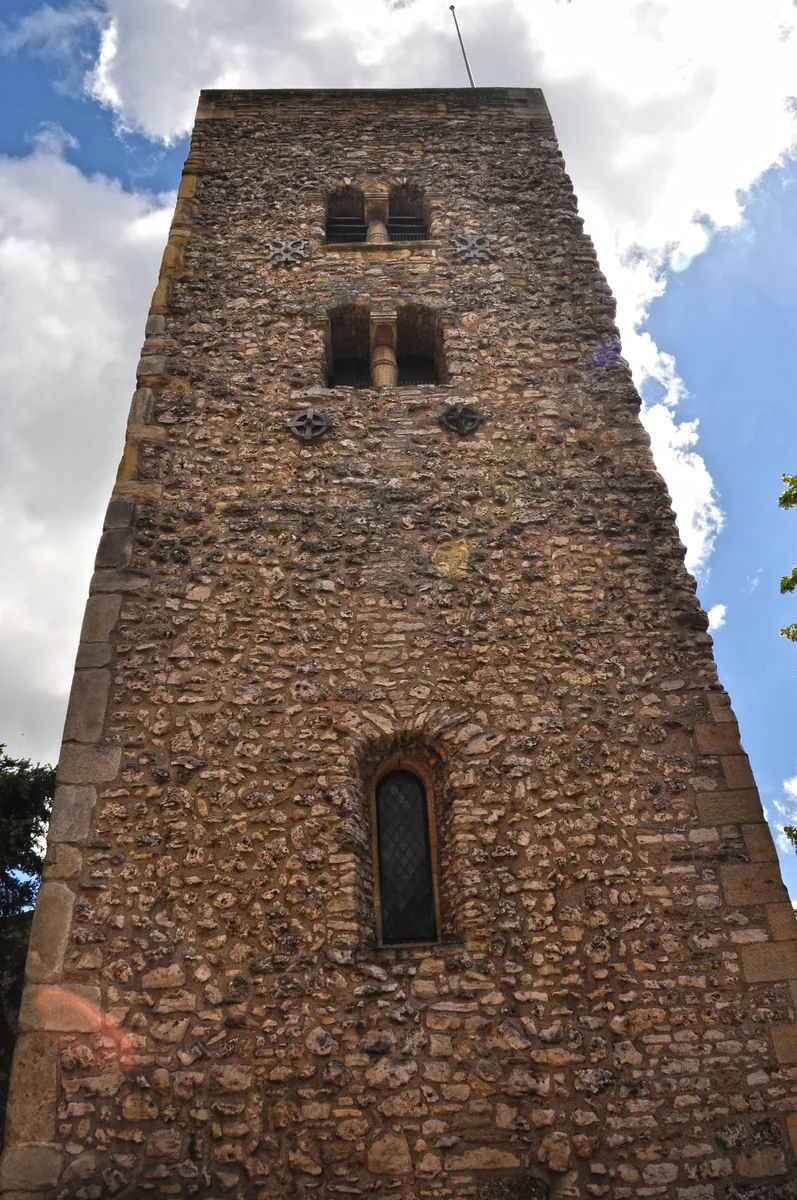
The Union project's most lasting product was not the paintings. While in Oxford, Rossetti and Burne-Jones noticed two sisters at the local theatre — Bessie and Jane Burden, daughters of an Oxford stableman — and recruited them as models. Jane appears in the murals (and in much of Pre-Raphaelite painting thereafter) as the dark-haired, heavy-jawed face of the movement's second generation. In April 1859, she married William Morris at St Michael at the North Gate — five minutes' walk from the Union. The marriage produced two daughters and, eventually, the slow scandal of Jane's relationship with Rossetti.
Visiting
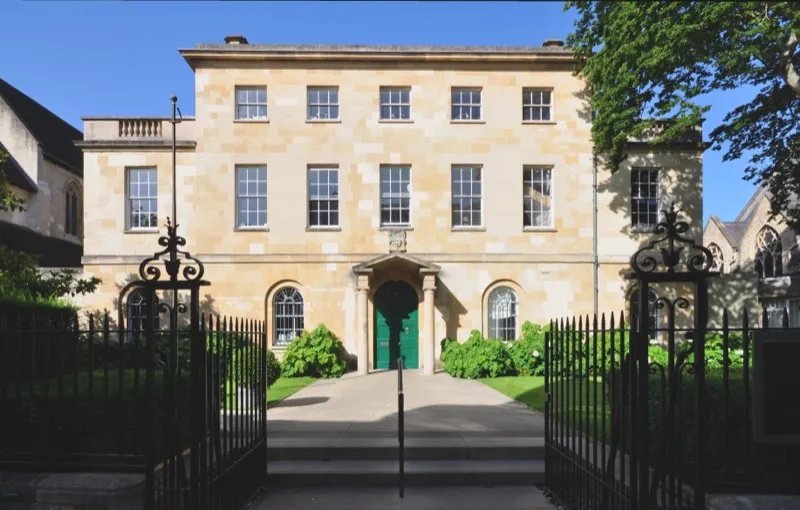
The murals are inside the Oxford Union's Old Library, off Frewin Court between Cornmarket and the Cornmarket–St Michael's Street corner. The Union is a private members' club, so casual entry isn't possible; in term, the Union office runs guided tours that take in the Old Library — these need to be booked in advance. Photography of the murals is at the discretion of the staff on the day.
Nearby
Within a few minutes' walk