Radcliffe Camera
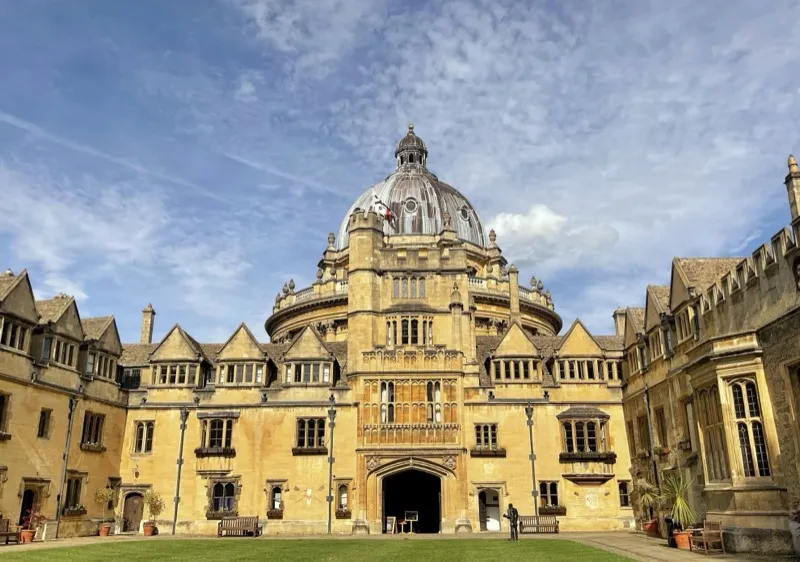
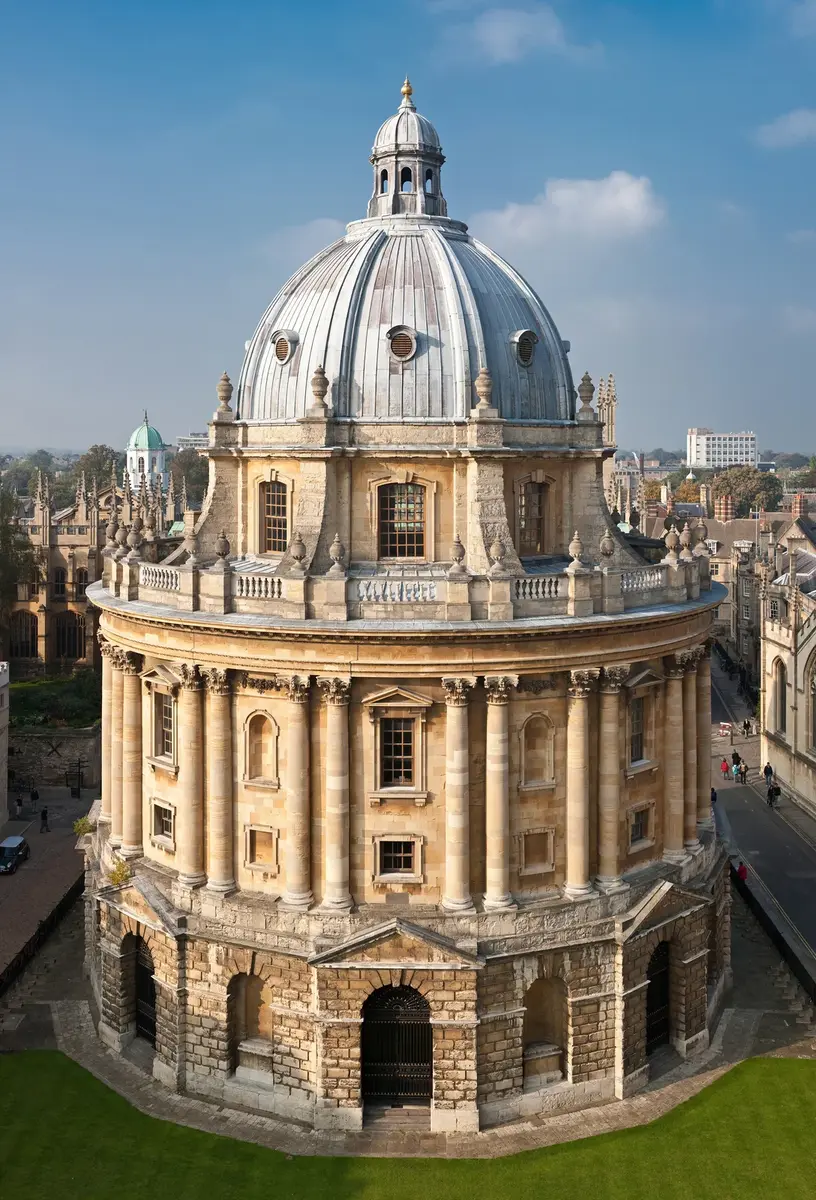
James Gibbs's English Palladian rotunda (1749) — the first circular library in the country and the most photographed building in Oxford.
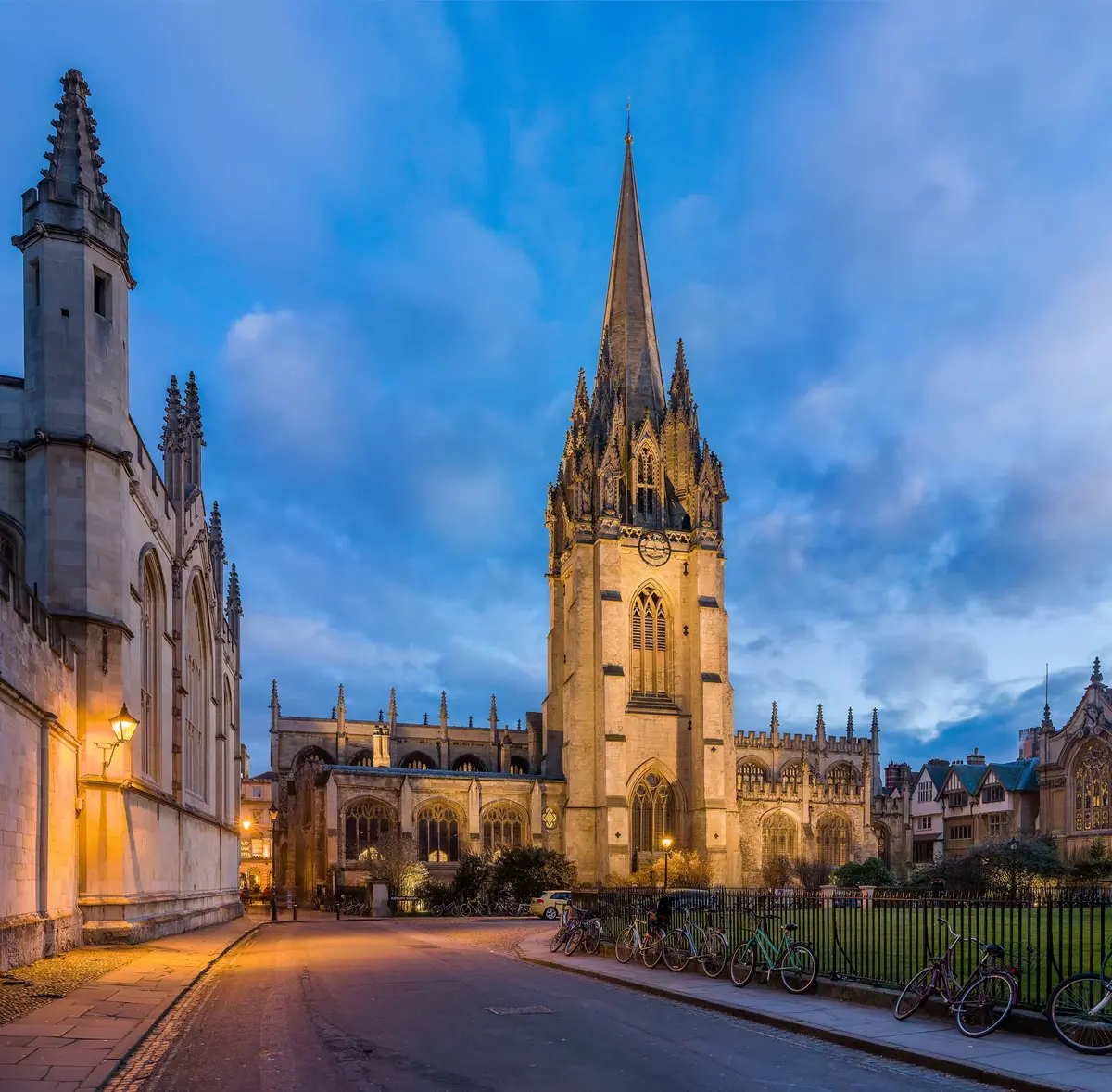
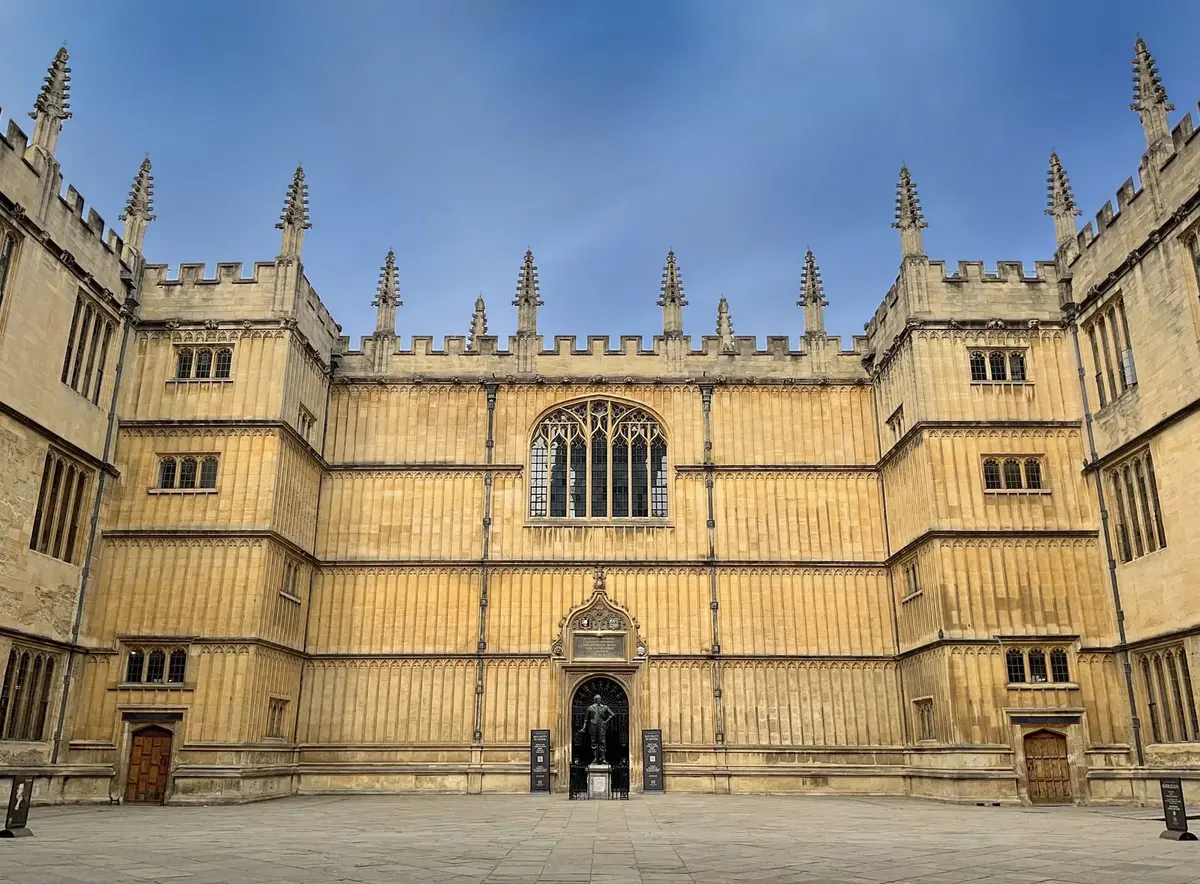
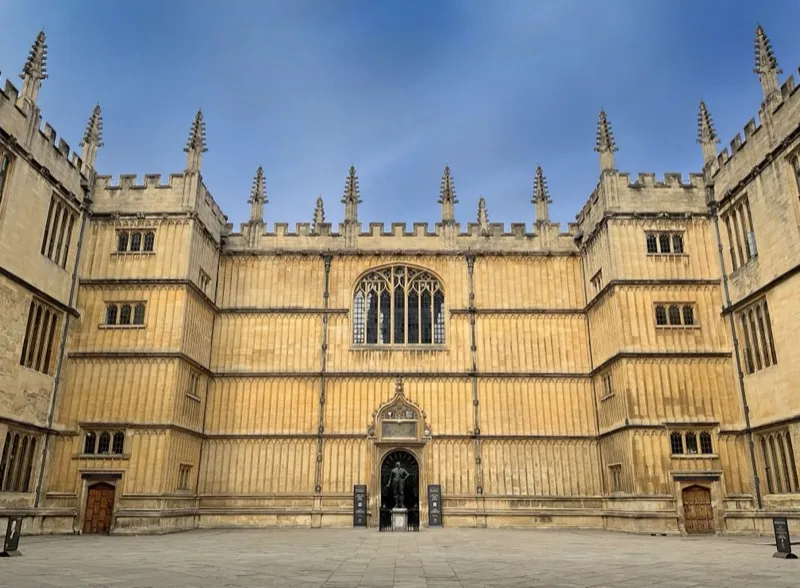
The interior is only accessible via the Bodleian’s extended (90-minute) guided tour. From outside, the best view is from the steps of St Mary’s church on Radcliffe Square — frames the building between Brasenose to the right and the Old Schools Quadrangle behind.
The Radcliffe Camera was built between 1737 and 1749 by the Scottish architect James Gibbs, funded by a bequest from Dr John Radcliffe, royal physician and the wealthiest medic of his era. It was originally a free-standing science library — a building type then almost unknown in England — and is the country's first purpose-built circular library.
Gibbs's design draws on Bramante's Tempietto in Rome and the work of Italian Baroque architects, fused with the more restrained English Palladian tradition. The building consists of a rusticated stone podium, a colonnaded drum encircled by paired Corinthian columns, and a leaded dome. The interior is a single circular reading room, originally lit by sash windows on three levels.
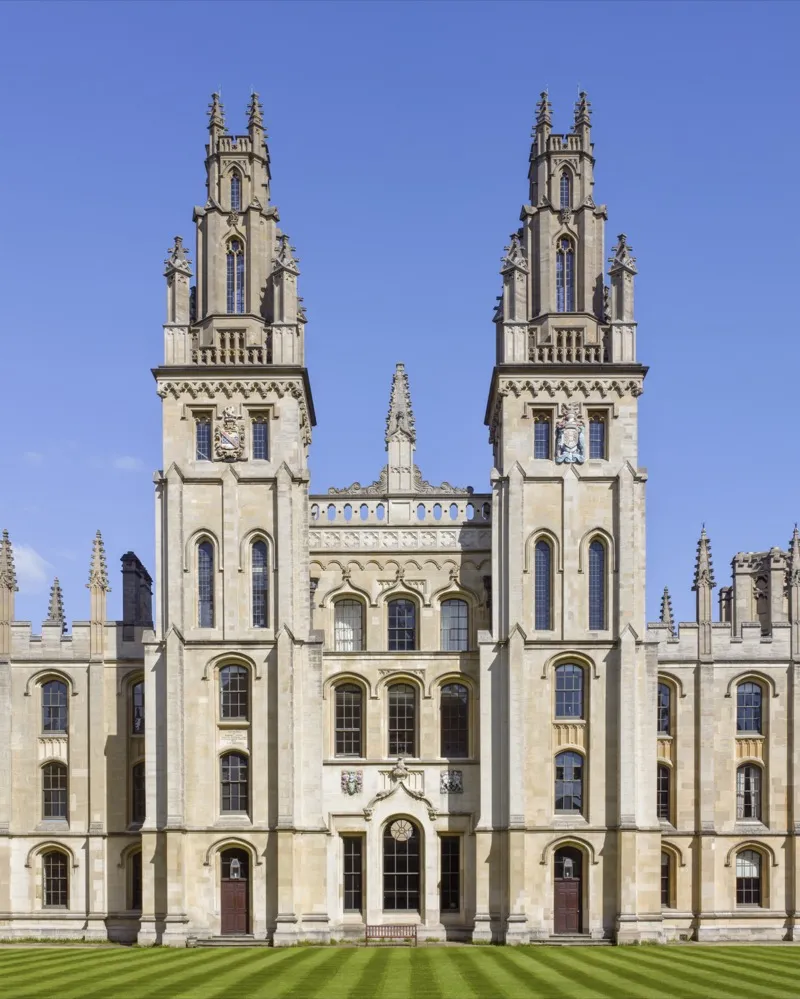
Since 1861 the Camera has been part of the Bodleian Library and now serves as a History Faculty reading room. It cannot be entered casually — visitors must take the Bodleian's full 90-minute "Extended Tour" — but the exterior is freely visible from Radcliffe Square, among Oxford's most consistently photographed open spaces. The Camera frames between Brasenose College to the east, All Souls College to the north, and the University Church of St Mary the Virgin to the south.
How to visit
The exterior is free to view at any time from Radcliffe Square — the square is a public pedestrian space, accessed from Catte Street at the Bridge of Sighs end or from Brasenose Lane. To go inside, book the Bodleian's Extended Tour (£18, 90 minutes) on the Bodleian's visit site. Tours typically run twice a day on Wednesdays, Saturdays and Sundays — check the calendar before travelling.
Frequently asked questions
Can you go inside the Radcliffe Camera?
The Radcliffe Camera is a working Bodleian Library reading room, so it is not open to casual visitors. The only public access is via the Bodleian's 90-minute "Extended Tour" (£18, advance booking required) which also covers Duke Humfrey's Library and the Divinity School. The exterior is free to view at any time from Radcliffe Square.
When was the Radcliffe Camera built?
The Radcliffe Camera was built between 1737 and 1749, designed by the Scottish architect James Gibbs and funded by a £40,000 bequest from Dr John Radcliffe, the royal physician who died in 1714.
Why is it called a "Camera"?
"Camera" is the Latin word for "room" or "chamber" — the building was originally called the Radcliffe Library and was renamed Radcliffe Camera (literally, "Radcliffe Chamber") when the science books were moved to the new Radcliffe Science Library in 1861 and the building became a single reading room of the Bodleian.
What style of architecture is the Radcliffe Camera?
English Palladian with Italian Baroque influences. Gibbs combined the centralised plan of Bramante's Tempietto in Rome with the more restrained Palladian vocabulary then dominant in Britain. It is the first purpose-built circular library in England and is Grade I listed.
Where is the best view of the Radcliffe Camera?
From the steps of the University Church of St Mary the Virgin on the south side of Radcliffe Square — the view frames the Camera between Brasenose to the right and the Bodleian's Old Schools Quadrangle behind. Climbing the tower of St Mary's gives the best aerial view of the Camera from above.
Nearby
Within a few minutes' walk