Oxford University Museum of Natural History
Dinosaurs, dodos, and Darwin's legacy — all under a Gothic Revival iron-and-glass roof.
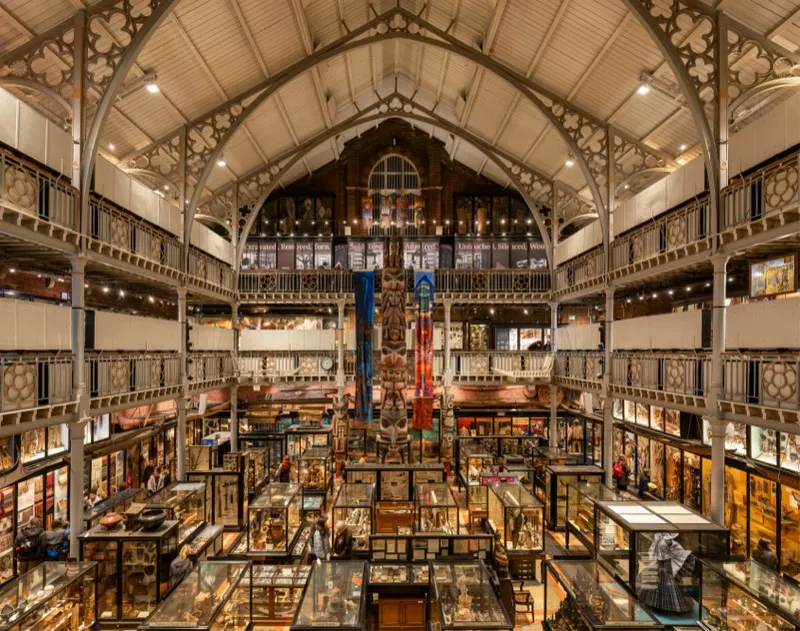
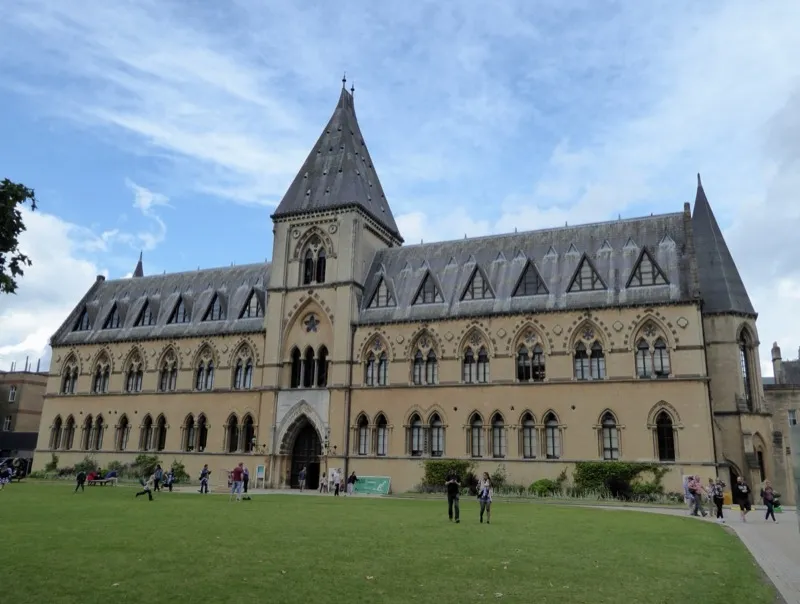
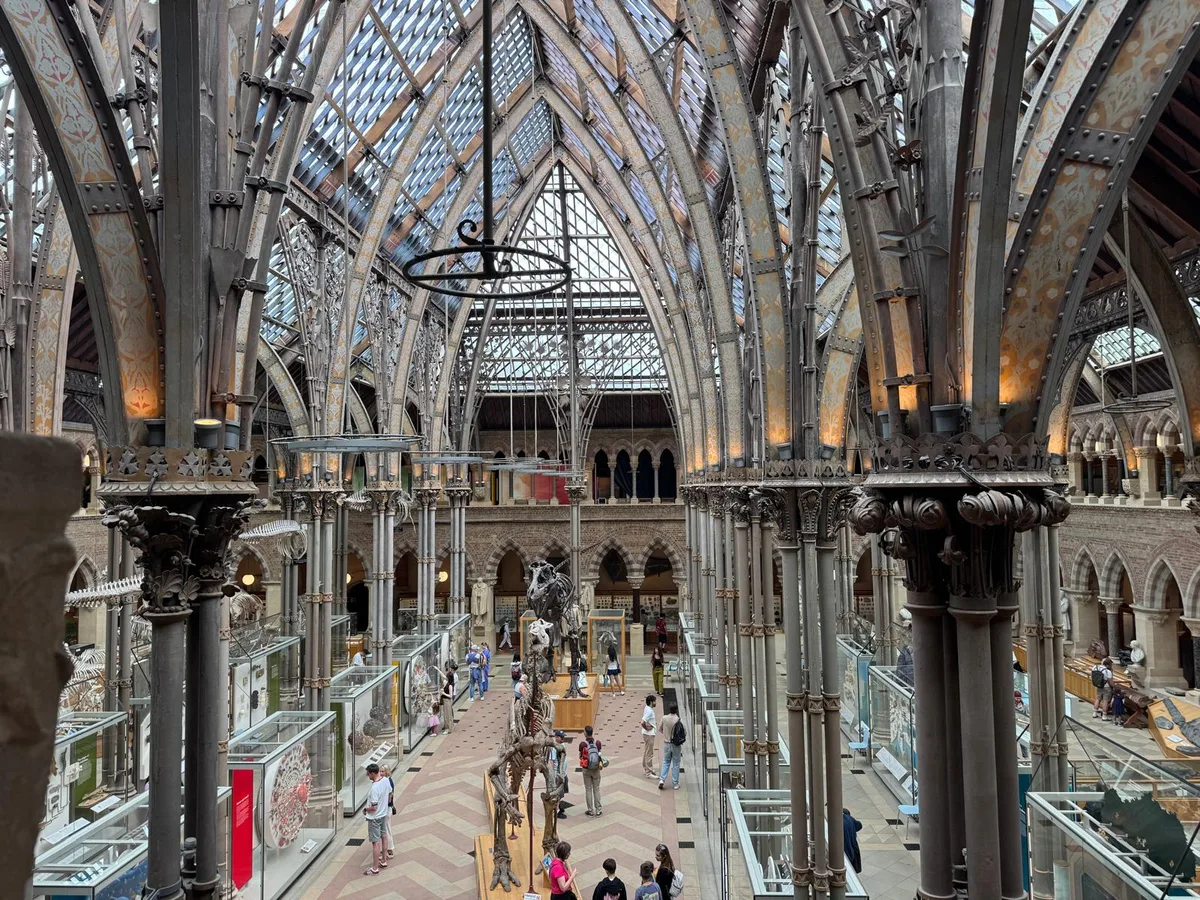
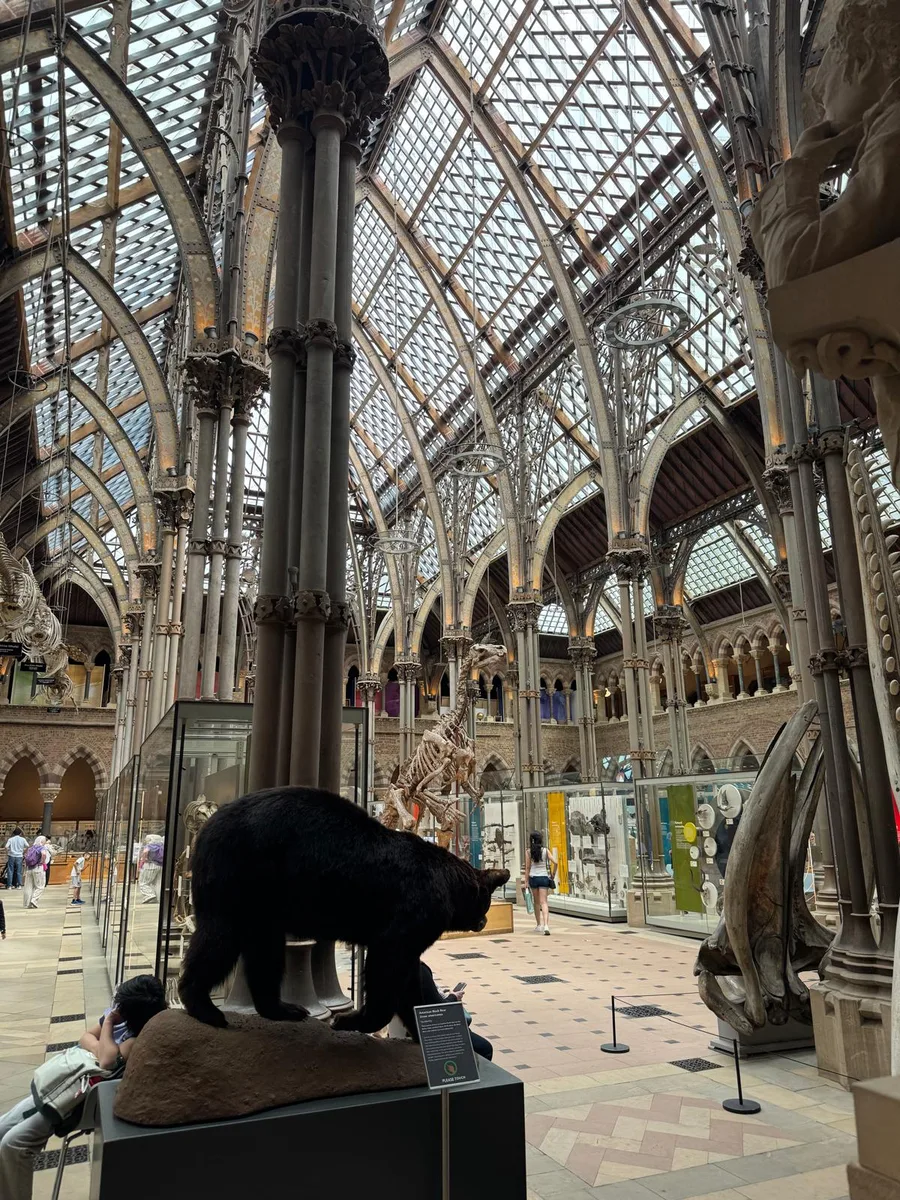
The Natural History Museum building alone is worth the visit. A soaring Gothic Revival hall with an iron-and-glass roof supported by cast-iron columns decorated with carved leaves and flowers — it looks like a cathedral dedicated to science, which is essentially what it is.
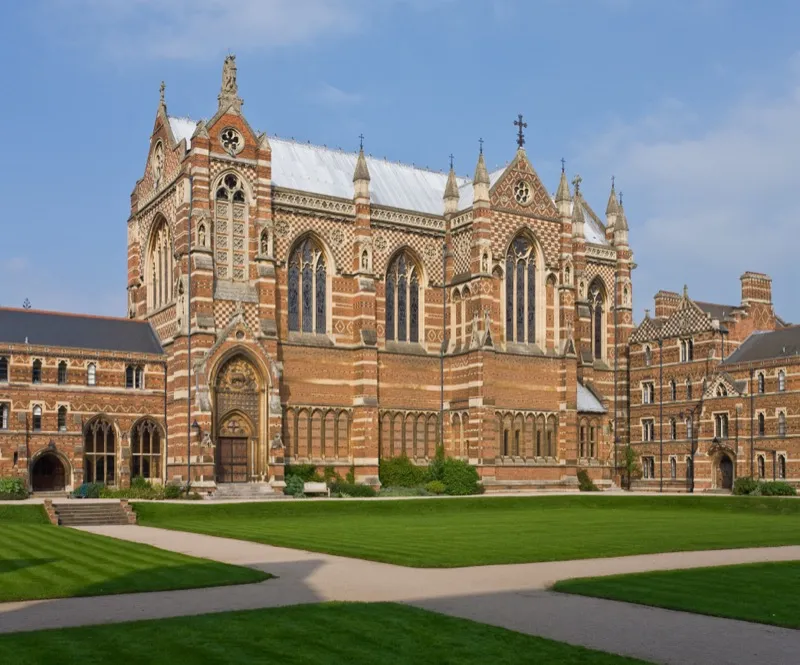
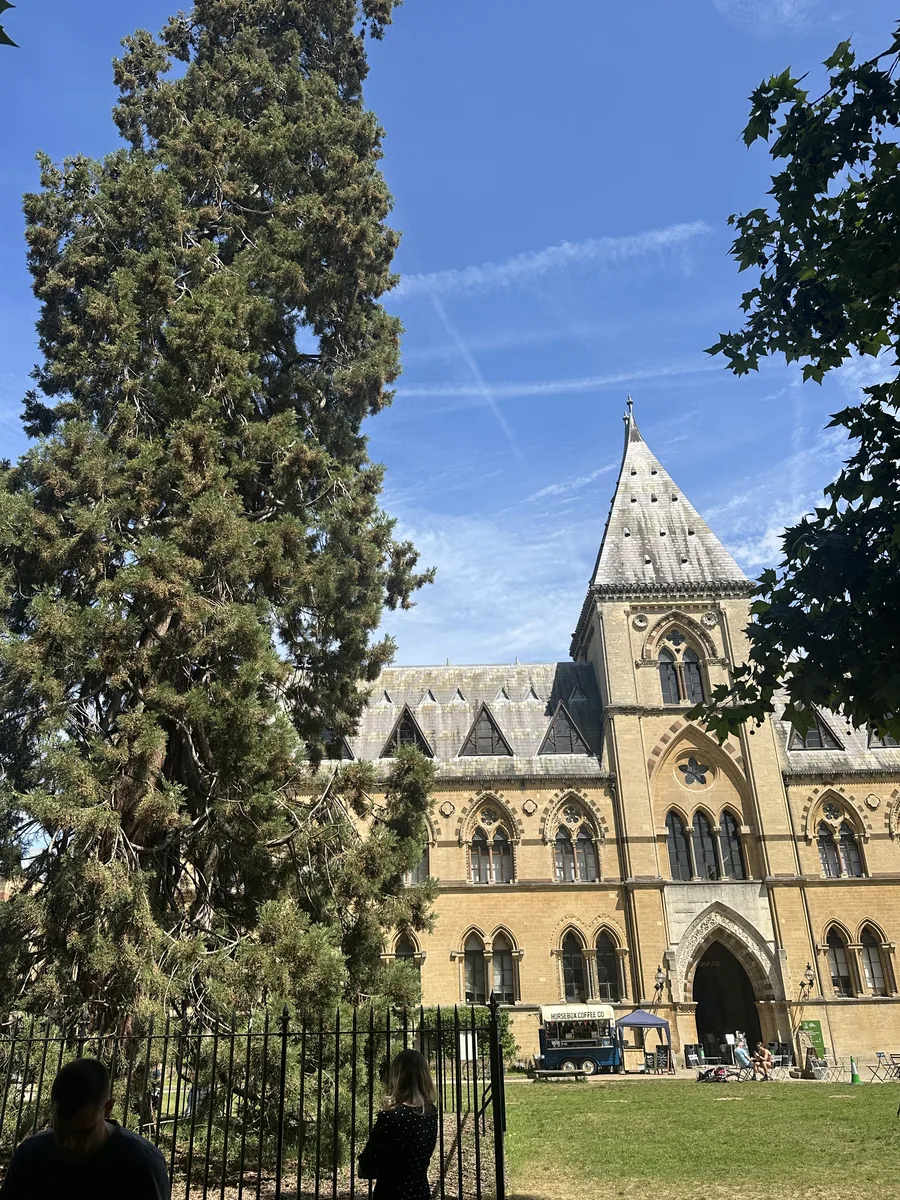 The mature cedar on the museum forecourt, framing the Gothic facade. Photo: OxfordLocal.
The museum was the site of the famous 1860 debate between Thomas Huxley and Bishop Samuel Wilberforce over Darwin's theory of evolution. That intellectual combativeness is still embedded in the building's DNA.
The highlights
The dodo. Oxford's Natural History Museum has more complete dodo remains than any institution in the world — the head and foot of the last known specimen. It's the museum's symbol and its most-visited exhibit.
The dinosaur skeletons in the main hall include a complete Iguanodon and several Oxford-local finds from the Jurassic Coast. The mineral collection in the galleries is extensive.
Visiting with children
This is a strong museum for children. Dinosaur skeletons at eye level, a hands-on area, and the door at the back leading into the Pitt Rivers (see separate entry) make this a full afternoon's entertainment.
Practical notes
Free. Open daily. Fully accessible. The Pitt Rivers Museum is accessed through a door at the back of the main hall — the two museums share a building, and you should visit both. The museum shop has excellent dinosaur toys and science kits.
Taylors Museum Cafe
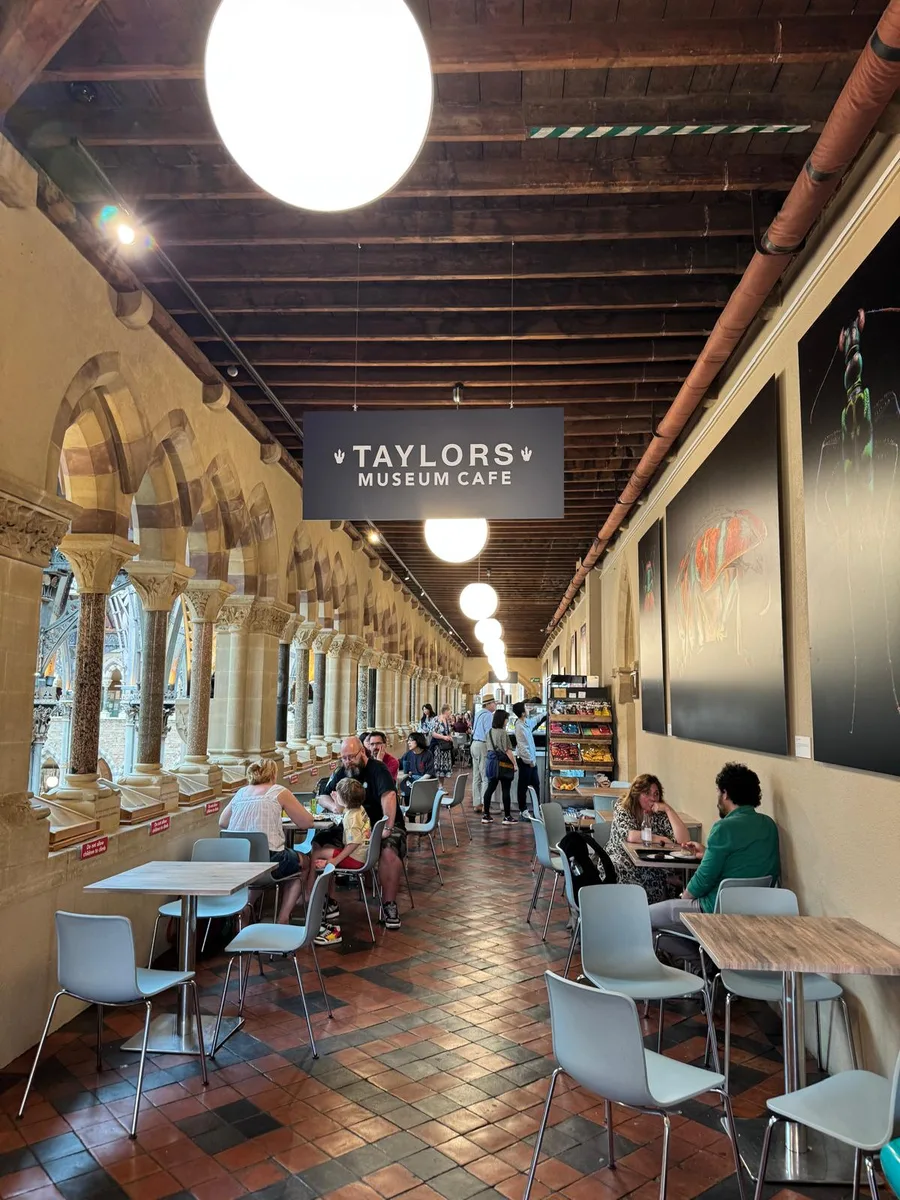
The cafe inside the museum is run by Taylors — the local Oxford sandwich-and-coffee chain — set in a vaulted cloister-style arcade off the main hall. Coffee, sandwiches, cake, and a children's selection; the seating is along the arches with views back into the great court.
Nearby
Within a few minutes' walk