Hidden Oxford
The Oxford that most visitors walk straight past — back alleys, medieval doorways, hidden gardens, and quiet corners.
Oxford's main streets are magnificent, but the city saves its best details for those who duck through unmarked doorways and wander down the lanes that don't appear in guidebooks. This walk threads through the back passages, hidden gardens, and overlooked corners that most visitors — and many residents — never find.
It's not a long walk in distance, but budget time for lingering. Half the pleasure is standing in a courtyard that's been there since the 1300s and realising you're the only person in it. The other half is the contrast: stepping off a busy street through a medieval archway into absolute silence.
The route
Start: The Covered Market (entrance from High Street or Market Street)
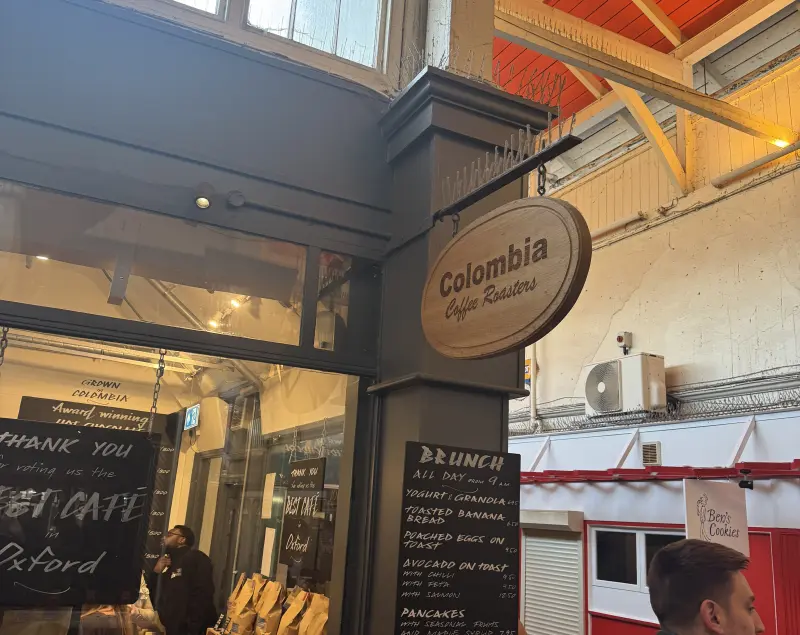
Oxford's Covered Market has been trading since 1774. Most visitors walk the main avenues; start by exploring the narrow side alleys. The Cake Shop (at the back, near the Golden Cross entrance) makes one of the best cakes in Oxford. Exit via the Golden Cross yard — a medieval coaching inn courtyard now housing a pizza restaurant, easy to miss entirely.
1. St Mary's Passage to Radcliffe Square (2 min)
Walk through the narrow St Mary's Passage between the High Street shops and the University Church. The passage opens suddenly onto Radcliffe Square — the effect is deliberate and theatrical. But instead of lingering, turn immediately right through the iron gate into the Bodleian Library's Old Schools Quadrangle. The courtyard is free to enter and usually empty.
2. The Clarendon Quad and Sheldonian (3 min)
Exit the Bodleian's quad to the north and cross into the Clarendon Building's courtyard. Look up at the lead statues of the Muses on the roof. Turn right past the Sheldonian Theatre, with its ring of Roman emperor busts on the railings — their expressions are wonderfully varied and slightly grotesque.
3. New College Lane (5 min)
Walk east down New College Lane, Oxford's narrowest and most atmospheric medieval street. Pass under the Bridge of Sighs, then continue past Hertford College. The lane narrows further, twisting past St Edmund Hall's back wall. The worn stone bollards have been here for centuries. At the far end, the lane opens onto Queen's Lane — turn right.
4. St Edmund Hall churchyard garden (off Queen's Lane)
Enter "Teddy Hall" through the lodge (visitors usually welcome outside exam season). In the back corner of the front quad, a tiny doorway leads to the old churchyard — a walled garden with medieval gravestones, flowering borders, and a Morris & Burne-Jones stained glass window in the chapel. It's one of the most peaceful spots in central Oxford.
5. Logic Lane (2 min)
Return to High Street and look for Logic Lane, a tiny alley between numbers 113 and 114. The lane runs between University College's buildings, under a bridge, and emerges on Merton Street. It's barely wide enough for two people to pass.
6. Merton College Fellows' Garden and Dead Man's Walk (10 min)
Walk east on Merton Street to Merton College. If the college is open, the Fellows' Garden has a wide view south over Christ Church Meadow. Whether or not you enter the college, follow Dead Man's Walk — the path running east along the outside of the old city wall between Merton and the Botanic Garden. The name comes from medieval funeral processions that used this route to reach the Jewish cemetery.
7. Holywell Street and the Bath Place alley (5 min)
Walk north to Holywell Street, one of Oxford's best-preserved medieval streets (the houses at the east end are 15th century). Halfway along, look for Bath Place — a narrow cobbled alley between buildings. Follow it through to the Turf Tavern, a pub so hidden that it has to put up signs to help people find it. The pub sits below street level, surrounded on three sides by the old city wall.
8. New Bodleian tunnel entrance (2 min)
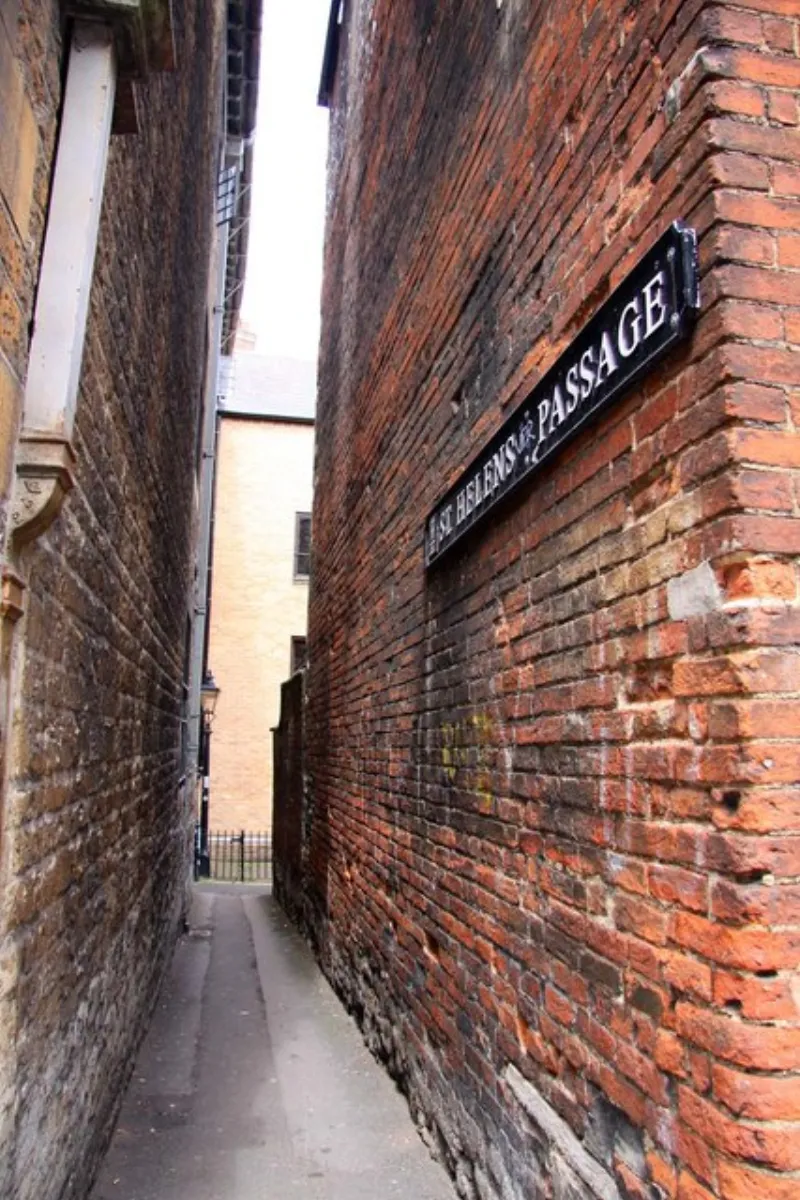
From the Turf, exit via St Helen's Passage to Holywell Street. Walk west past the Holywell Music Room — the oldest purpose-built concert hall in Europe (1748). On Broad Street, look for the brass studs in the road surface outside Balliol College — they mark the spot where the Oxford Martyrs (Latimer, Ridley, Cranmer) were burned at the stake.
9. St Sepulchre's Cemetery, Jericho (10 min)
Walk north on Walton Street into Jericho. At the end of Jericho Street, find St Sepulchre's Cemetery — a Victorian cemetery now managed as a wildflower garden. The graves include Benjamin Jowett (Master of Balliol) and several Victorian Oxford scholars. It's a genuinely beautiful, overgrown, forgotten place.
End: St Sepulchre's Cemetery — from here, Jericho's Little Clarendon Street and Walton Street are a minute's walk south for coffee or food.
Practical notes
- Distance: 2.5 miles (4km) point-to-point
- Time: 2 hours minimum, but this walk rewards slow exploration — 3 hours is better
- Terrain: all paved, some cobblestones; largely flat with one short flight of steps on Dead Man's Walk
- Best time: weekday mornings for quiet access to college quads; late afternoon light on Holywell Street is beautiful
- Access: some college courts may be closed during exam season (May-June) or after 4pm; check lodge notices
- Refreshments: Covered Market (start), Turf Tavern (mid-walk), Jericho cafes (end)
Why this walk
Oxford rewards curiosity over speed. The main sights are rightly famous, but the city's texture — the worn stone, the hidden doors, the sudden gardens — only reveals itself to people who wander slowly and try every turning. This walk is a guided version of that instinct: it takes you to the places that locals discover over years, compressed into an afternoon.
Nearby
Within a few minutes' walk