St Mary Magdalen
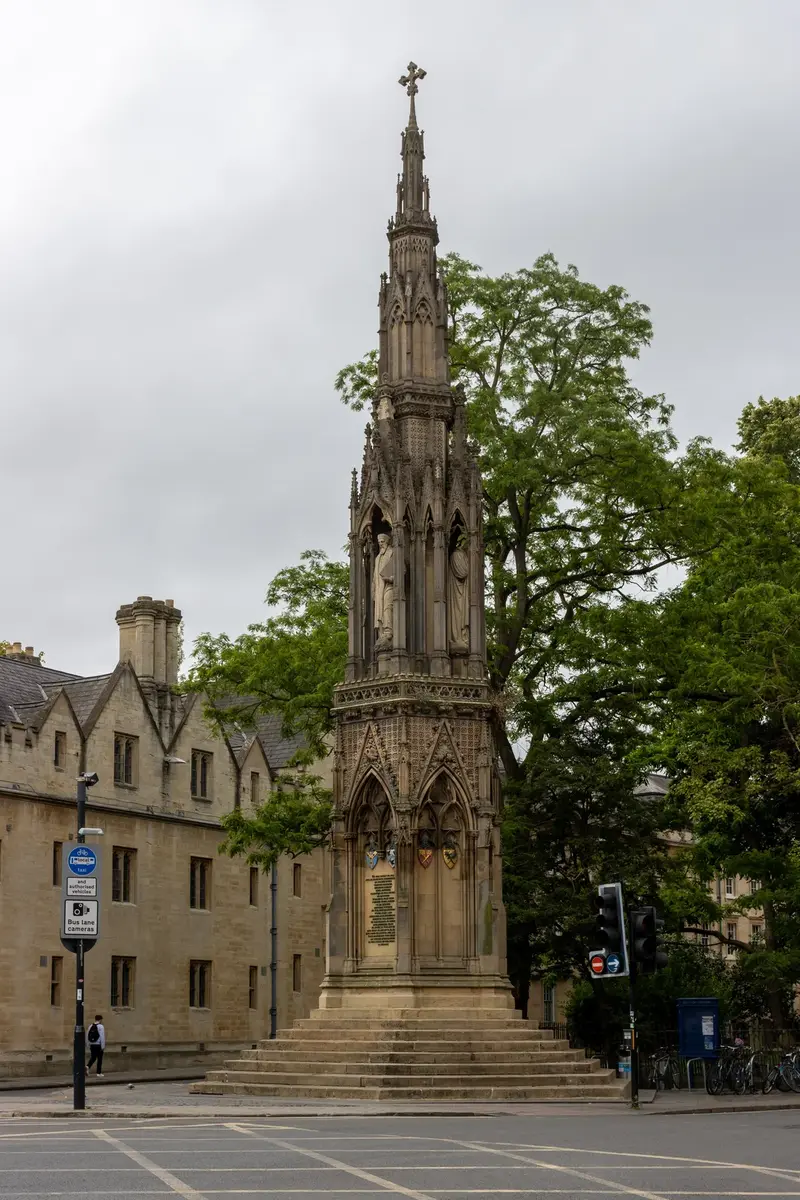
A Grade I-listed ancient parish church on Magdalen Street, with Saxon origins, work by Saint Hugh of Lincoln in 1194, and Oxford's first Gothic Revival interior — George Gilbert Scott's 1841 Martyrs' Aisle, complementing the [Martyrs' Memorial](/places/landmarks/martyrs-memorial/) immediately to the north.
Anglo-Catholic in tradition, with Mass twice daily on weekdays and three times on Sundays — the main celebration is at 10:30 am Sunday. Look for the early 14th-century carved ‘Jewel Chest’ inside, and the Carmelite chapel of 1320, now the Lady Chapel, in the south aisle.
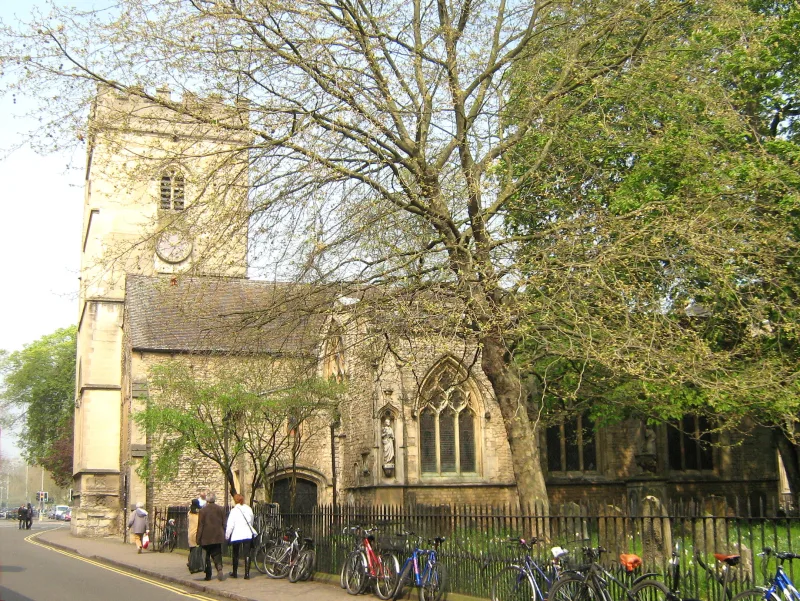
St Mary Magdalen is one of Oxford's ancient parish churches and a Grade I listed building, on Magdalen Street between Cornmarket and the Martyrs' Memorial. Worship is high-church Anglo-Catholic; Mass is celebrated fifteen times a week, with the main Sunday celebration at 10:30 am.
From Saxon wooden church to medieval rebuild
A Saxon wooden church stood outside the city walls just beyond the North Gate. After it burnt down in 1074, Robert D'Oyly, Norman Constable of Oxford, replaced it with a single-aisle chapel. In 1194 Saint Hugh, Bishop of Lincoln, rebuilt the church; work of that period survives in the east wall of the chancel and in the south aisle, alongside the altar dedicated to Thomas Becket. The chancel was rebuilt in the late 13th century. In 1320 the Carmelites founded a chapel in the south aisle — the present Lady Chapel.
The west tower and the south porch were built between 1511 and 1531.
Scott's Martyrs' Aisle
The major Victorian work was the 1841 to 1842 restoration. The north or Martyrs' Aisle was the work of a young George Gilbert Scott and his partner W. B. Moffatt — Oxford's first Gothic Revival interior, deliberately complementing Scott's Martyrs' Memorial immediately to the north.
What to look at
The early 14th-century carved wooden chest known as the Jewel Chest is held in the church. The antiquary and biographer John Aubrey was buried in the churchyard.
Nearby
Within a few minutes' walk