Campion Hall
Oxford's Jesuit hall — and the only building Lutyens ever designed in the city
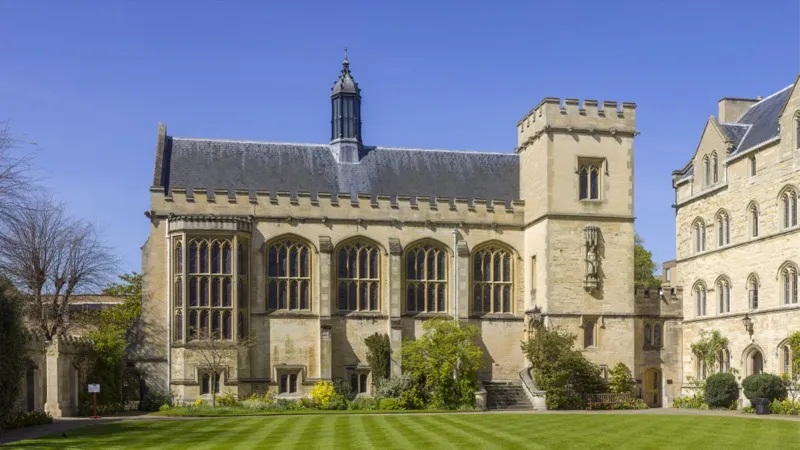
Campion Hall sits on a quiet lane south of Christ Church, tucked between that vast college and Pembroke. The hall is a Catholic foundation run by the Society of Jesus — the only Jesuit institution within the University of Oxford — and takes its name from Edmund Campion, the Elizabethan martyr who had been a fellow of St John's before his execution in 1581. It is a small place, mostly graduate, and best known to architecture-minded visitors for one reason: the building is the only thing Sir Edwin Lutyens ever designed in this city.
How a Jesuit hall reached Oxford
For most of the nineteenth century, Catholics could not formally take degrees at Oxford. When that bar was lifted, the Jesuits moved quickly. On 9 September 1896, Fr Richard Clarke — formerly of St John's College himself — opened a small private hall at 40 St Giles', initially called Clarke's Hall, to give young Jesuits a way of reading for an Oxford degree. After his sudden death four years later, the hall was renamed twice in quick succession — Pope's Hall, then Plater's Hall — as the role of master passed between Jesuit fathers. In 1918 it was granted permanent status by the university, and at that point it took the name it still carries today, after the Elizabethan martyr Campion.
The Lutyens building
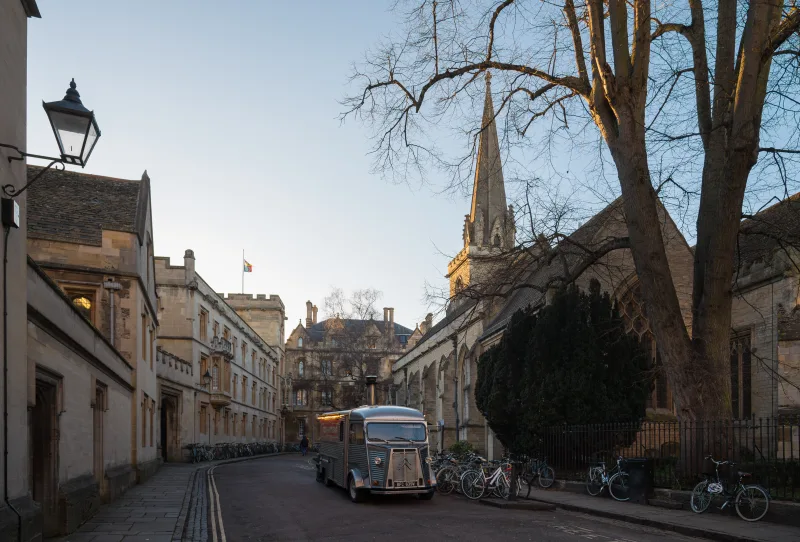
The current home is on Brewer Street, a back lane south of St Aldate's that once housed Oxford's medieval brewers and butchers (the street's older name was Sleying Lane). The Jesuits arrived here in the mid-1930s when their previous lease was running out, buying up a lodging-house called Micklem Hall and the old stables that adjoined it. The whole complex was knocked together and rebuilt to a design by Edwin Lutyens, finished in 1936 and opened that June by the Spanish ambassador.
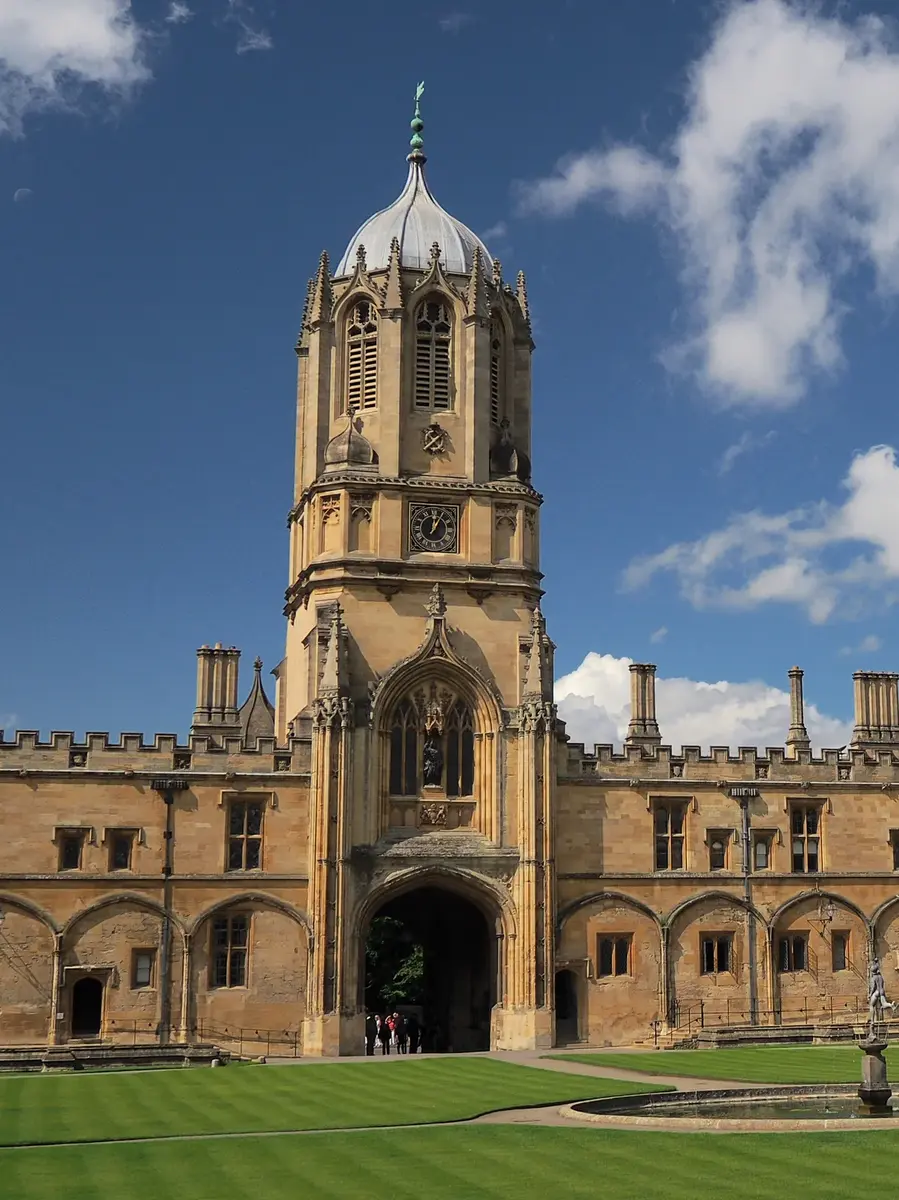
It is a strikingly subtle building for an architect best known for the imperial grandeur of New Delhi. The street frontage is restrained, with stonework that has been compared to seventeenth-century Cotswold work; inside, the chapel has a semi-circular apse and a baldachin whose columns carry the small bells of Lutyens's so-called Delhi Order. The whole was given a Grade II* listing in 1954, and Lutyens never built anything else in Oxford — his only other contribution to the city is the 1928 fountain at Christ Church's Tom Quad next door.
Art and atmosphere
A serious collection of religious art covers the walls, spanning some six hundred years. Most of it was assembled by Fr Martin D'Arcy, master of the hall from 1933 to 1945 and one of the great Catholic intellectuals of mid-century Oxford. Among the pieces was a small Crucifixion on a panel that hung in the hall for decades, was sent to the Ashmolean in 2011, and has since been argued about as a possible late work by Michelangelo — or, more cautiously, by his pupil Marcello Venusti.
The internal arrangement of the hall is unusual for Oxford. There is no separation between the senior and middle common rooms, and the dining hall does not run a High Table. At formal meals the master sits with the students rather than above them.
Visitor info
The hall is a working Jesuit community and a graduate hall, not a tourist site. The chapel is occasionally open by arrangement, and the hall hosts academic events that are open to the public — these are advertised through the official website and the Laudato Si' Research Institute, which has been based at the hall since 2018. The simplest way to see anything of Lutyens's work here is to walk down Brewer Street from St Aldate's and look at the entrance front.
Frequently asked questions
Where is Campion Hall in Oxford?
Campion Hall is on Brewer Street, a short side-street south of St Aldate's, with Christ Church on one side and Pembroke College on the other. The entrance is a few minutes' walk from Carfax. The hall sits on the line of the old medieval brewers' quarter.
Why is the building important?
In all of Oxford, Lutyens designed only one building, and Campion Hall is it — one of Britain's most significant twentieth-century architects, best known for the planning of New Delhi and for the war memorials of the 1920s. He designed both the structure and many of the fixtures, fittings and chapel furnishings; it was completed in 1936 and Grade II* listed in 1954.
Is Campion Hall a college?
Campion Hall is a Permanent Private Hall (PPH) of the University of Oxford, not a full college. Permanent Private Halls have the same university privileges as colleges but are run by religious foundations. Campion Hall is the Jesuit hall, founded in 1896 and granted permanent status in 1918.
Nearby
Within a few minutes' walk