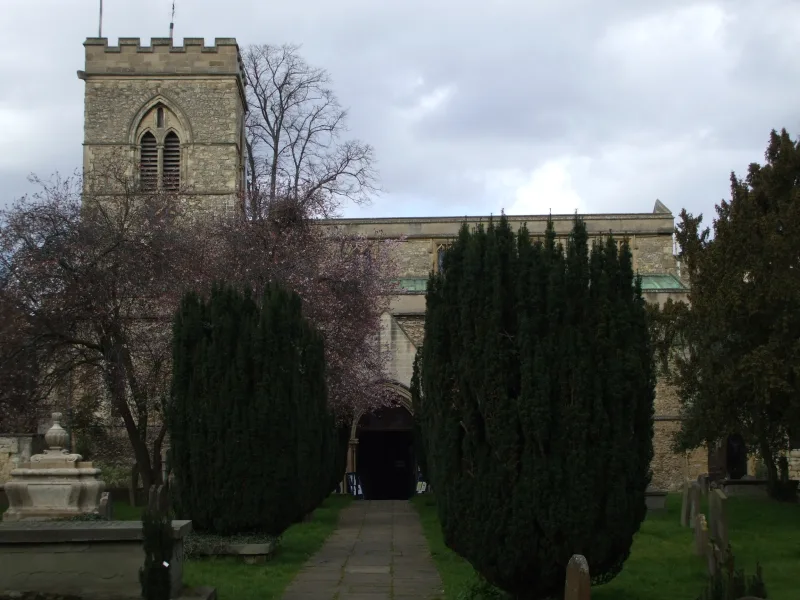
St Giles' Church
The Norman parish church at the northern head of St Giles', finished in 1120 and consecrated in 1200 by St Hugh of Lincoln — the consecration that gave Oxford [St Giles' Fair](/places/streets/st-giles/).
The churchyard’s southern end runs up to the Oxford War Memorial, so the walk from town reads church-then-memorial in a single line of sight. The 12th-century waterleaf capitals in the tower space were obscured by the organ from 1953; the organ came out in 2025 pending a 2028 replacement, and the capitals are visible now in a way they haven’t been in living memory.
St Giles' is a parish church in North Oxford at the head of St Giles', where the thoroughfare splits into Woodstock Road and Banbury Road. Built in the 12th and 13th centuries — the original Norman church was finished in 1120 for Edwin, son of Godegose — it stands 550 yards north of the line of the old city wall, in what was then open fields. The Oxford War Memorial adjoins the southern end of the churchyard.
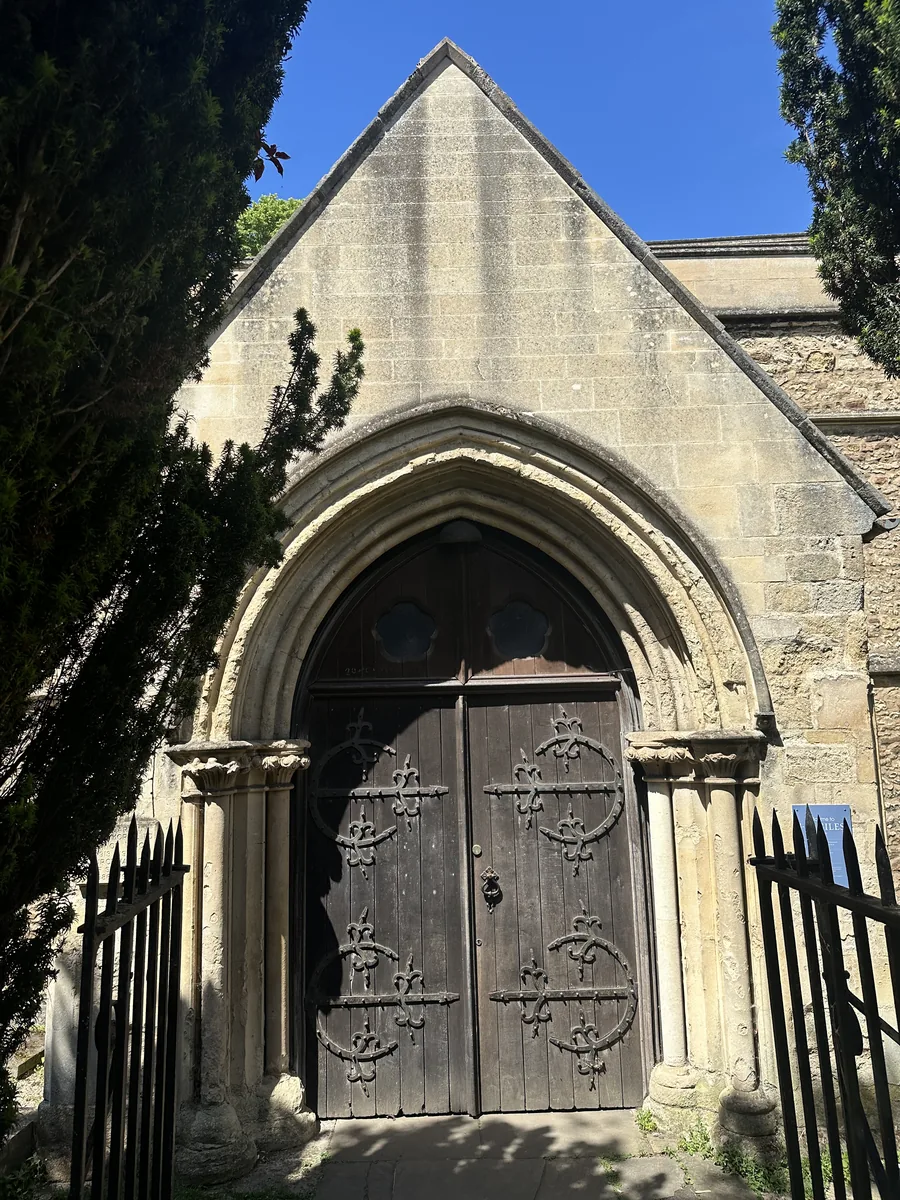 The south doorway — Norman fabric still visible in the lower courses. Photo: OxfordLocal.
A Norman foundation
In 1139 Edwin granted the church and its property to the newly founded Benedictine Godstow Abbey, two miles to the northwest. It was not consecrated until 1200, by Saint Hugh of Lincoln; a 13th- or 14th-century consecration cross of interlaced circles cut into the western column of the bell tower is thought to commemorate the event. To mark the consecration, St Giles' Fair was established and still runs on the Monday and Tuesday after the Sunday following 1 September — St Giles' Day. The same Bishop Hugh expanded St Mary Magdalen to the south in 1194.
Surviving 12th-century fabric includes two clerestory windows on the north side of the nave and the lower parts of the bell tower; the upper tower, aisle arcades and Early English lancet windows are early 13th-century. The Decorated chancel is late 13th-century.
After the Reformation
Godstow Abbey surrendered the church and lands to the Crown in 1539. In 1573 the church passed to Sir Thomas White — Lord Mayor of London and founder of St John's College — and St John's has held the advowson of the parish ever since. The building was damaged during the English Civil War siege of Oxford; the vicar John Goad is recorded as leading services during the Parliamentary bombardments of 1645.
Bells
The tower carries a ring of eight bells. The oldest is the tenor, cast by Ellis Knight I of Reading in 1632.
Nearby
Within a few minutes' walk