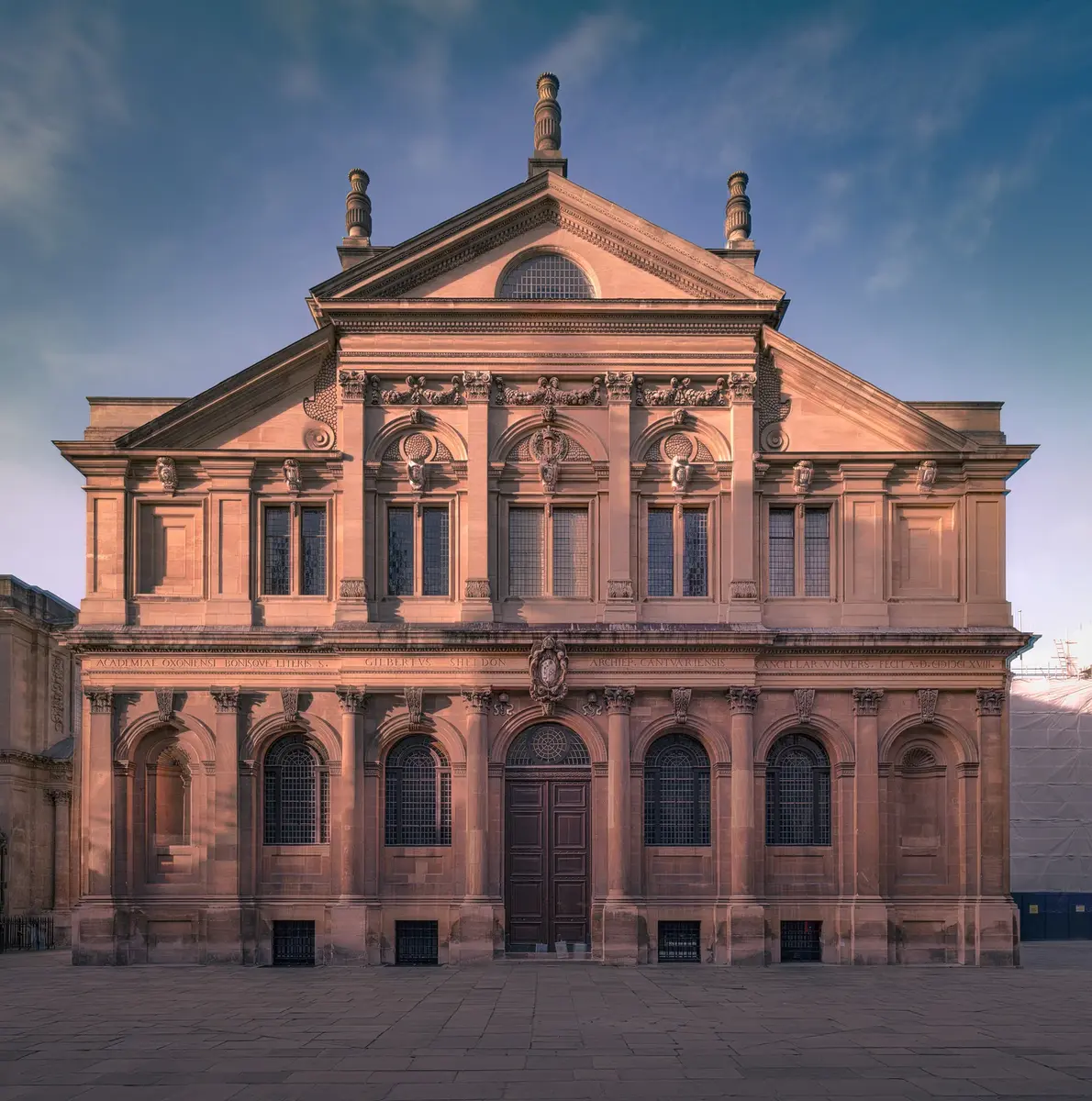
Sheldonian Theatre
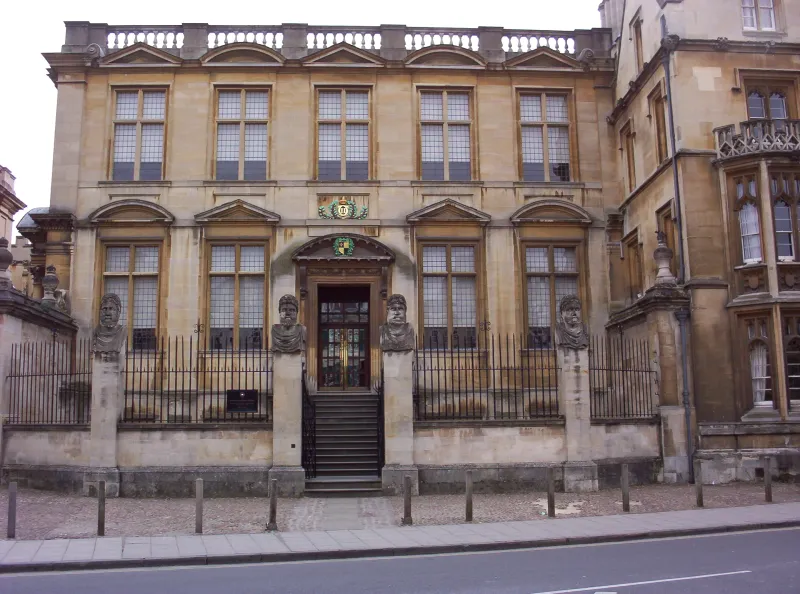
Sir Christopher Wren's first major building (1668) — the University's ceremonial assembly hall, with a painted ceiling and a viewing cupola.
The cupola at the top of the Sheldonian gives the best 360° view of the central Oxford rooftops — quieter and higher than Carfax. Buy the joint Bodleian + Sheldonian ticket. The ‘Emperor Heads’ on the railings outside Broad Street are Michael Black replacements for the eroded Stuart-period originals.
The Sheldonian Theatre was the first major architectural commission of Sir Christopher Wren, designed in 1664–1669 while Wren was still Savilian Professor of Astronomy at Oxford and before he had built anything in London. It was funded by Gilbert Sheldon, Archbishop of Canterbury and former Warden of All Souls, to replace St Mary's Church as the University's ceremonial venue.
The plan is loosely modelled on the Roman Theatre of Marcellus, a precedent Wren knew through Serlio's engravings. Its most striking feature is the wide unsupported wooden roof — at 70 feet by 80 feet, the largest in England without internal columns at the time. The ceiling was painted by Robert Streater in 1669 with a vast allegorical scene of Truth descending on the Arts and Sciences.
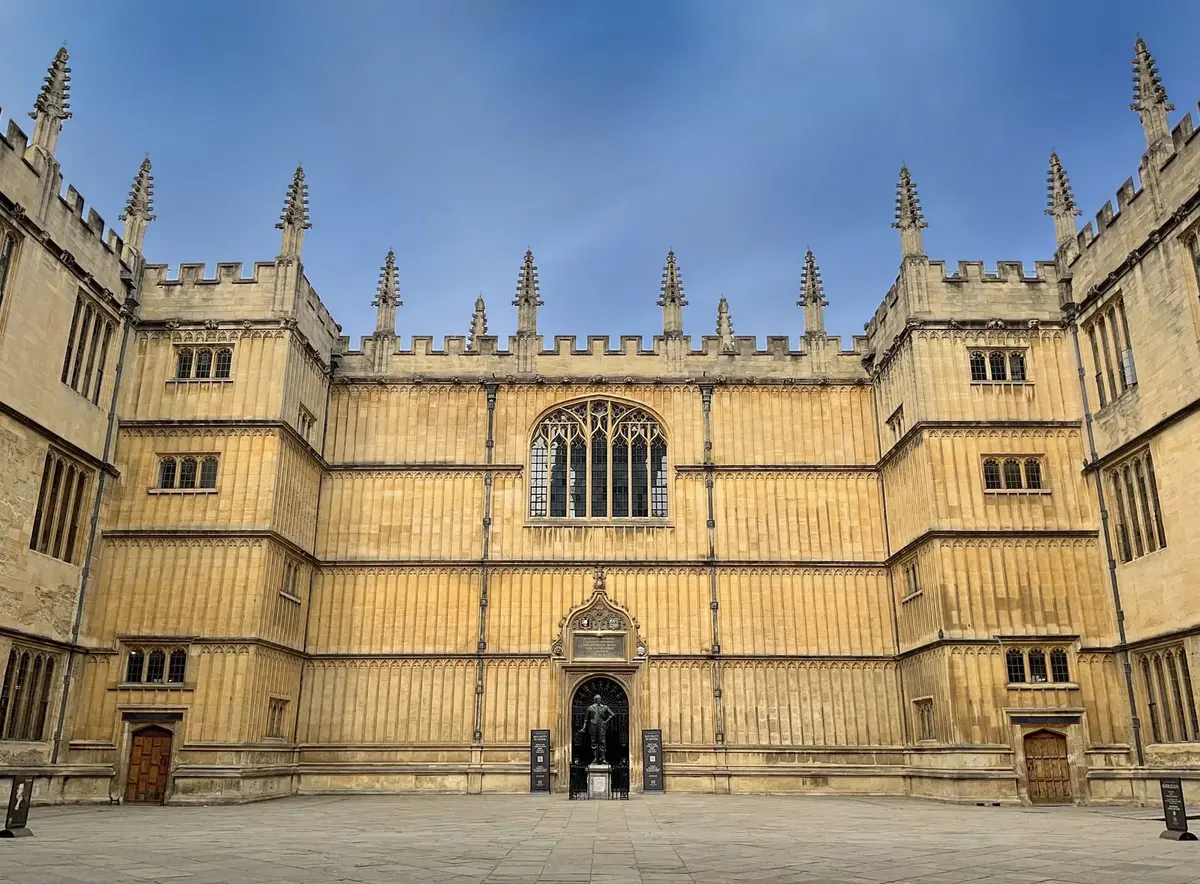
The Sheldonian remains the working ceremonial centre of the University. Honorary degrees, the annual Encaenia, and matriculation are conducted here. Visitors can climb the cupola for views over Broad Street and the Old Schools Quadrangle. The building closes to visitors during ceremonies and rehearsals — check the website before making a special trip.
Nearby
Within a few minutes' walk