The Covered Market
Oxford's beating heart since 1774 — over 50 independent stalls under one historic roof.
The palm-sized pies from the Pieminster stall and a coffee from Cardew & Co. — that’s the local’s lunch. Come in from Market Street for fewer crowds.
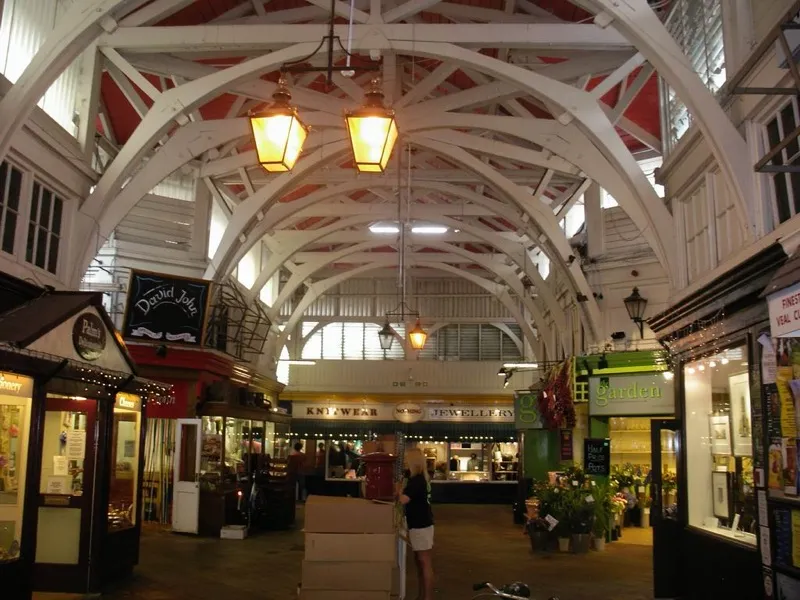
The Covered Market has been at the centre of Oxford life since 1 November 1774, when it was built by architect John Gwynn (who also designed Magdalen Bridge) to clear the messy street markets from the surrounding roads. Over 250 years later, it remains a labyrinth of narrow aisles lined with more than 50 independent shops, food stalls, and cafes. It still feels local despite sitting in the middle of the tourist district.
The building is Grade II listed. Four original entrances face the High Street, three more open onto Market Street, and a passage through Golden Cross connects to Cornmarket. The roof was restored with a £1.6 million investment in 2017. What makes it special isn't any single stall. It's the density of independent traders in one place, the social glue of a market that locals actually use every day, and the fact that it has resisted every attempt to turn it into a sanitised food hall.
Where to eat
The list below was checked on a Saturday afternoon visit on 2026-04-26 — the market's stall mix changes over the years, but these traders were all open and trading.
Alpha Bar — the queue at lunchtime tells you everything. Massive, customisable falafel wraps and boxes at prices that shame the chain restaurants on the High Street. Central Oxford's standout for portion size versus price.
Ben's Cookies — an Oxford institution since 1984. Cookies baked fresh throughout the day and sold warm from the counter. The dark chocolate chunk is the classic. The queue moves fast.
Sasi's Thai — tiny stall, enormous flavours. Pad thai, green curry, and specials chalked on the board. A popular Thai lunch option at market prices.
Brown's Cafe — full English breakfasts, builder's tea, and no pretension. This is where market traders eat. If you want to see the market at its most authentic, sit here at 8:30am.
Lula's Ethiopian Cafe & Deli — traditional Ethiopian dishes on injera, with a Thursday-evening coffee ceremony. Has expanded into a second site within the market.
Ginger & Spice — modern Punjabi street food, opened in late 2025 after building a reputation from a mobile food van. The venison curry has already made a name for itself.
Pieminister — proper pies at stall 58. The steak and ale is dependable, the specials rotate. A pie and a coffee is a legitimate lunch here.
Il Corno — Neapolitan panuozzi bar. Pizza dough baked, split, and stuffed with mozzarella and southern Italian fillings. Half panuozzi from around £5.
Sartorelli's — wood-fired sourdough pizza in partnership with Church Hanbrewery, with a separate "Pizza in the market" hatch on the same frontage for slices.
Brothers Sandwich Shop — long-running sandwich shop and café-deli with bench seating along the front. Hot and cold sandwiches, breakfasts, espresso.
Georgina's Coffee Shop — claret-pink coffee shop with an upstairs seating room reached by a wooden staircase from the counter. Sandwiches and pasta from lunchtime.
Hamblin Bread — stoneground sourdough bakery, opened 2024. Wood-burning oven visible behind the counter; viennoiserie and a bread-led sandwich list.
A Taste of China — Shaanxi-style Chinese kitchen (三秦百味) with photo menus in the windows. Alone among the market's stalls in working a regional Chinese register.
Sushi Bowl — sushi counter with paper lanterns over the door. Nigiri sets, sashimi platters and bowls, made and packed in front of the customer.
Covered Spuds — jacket potato counter at stall 16A. Eight fillings on the warmer; gluten-free and halal options labelled.
Gulp Fiction — café and cocktail bar with a chequerboard floor and a rainbow flag at the door. Coffee and cake by day, cocktails and craft beer through to closing.
The Market Tap Social — three counters under one frontage: pastries and coffee, wine and cocktails, local craft beer in the fridge.
Teardrop Bar — drinks bar in the Cellar Door corner near Bonner's, the sister business to The Market Cellar Door. Late opening Thursday to Saturday in summer; flights of beer and wine across both units.
The Souvlaki Brothers — Greek souvlaki at Unit 121, Avenue 4, opened in 2018 by brothers Panny and Yan whose family is from Chios. Distinct from Brothers Café above — different stall, different family.
Where to shop
David John — the market's butcher. Oxford sausages, properly hung meat, and knowledgeable staff who'll advise on cuts.
Bonner's — greengrocer, operating since 1952. Seasonal fruit and veg from local farms. The kind of shop where the stallholder knows what's good this week.
Cardew & Co — loose-leaf tea specialists. An Oxford institution in its own right. The wall of tea canisters is impressive, and they'll brew you a pot to drink in the market.
The Oxford Cheese Company — British and European cheeses, properly kept. They'll let you taste before you buy, and the staff are knowledgeable.
The Cake Shop — cakes and tray bakes sold by the slice. Victoria sponge, brownies, flapjacks, all at fair prices.
Palm — independent clothing and gifts. Oxford-made where possible.
The Brush Shop — a Covered Market institution selling every type of brush imaginable, from hairbrushes to boot brushes to specialist cleaning brushes. The kind of deeply specific shop that only a market like this could sustain.
Sanders of Oxford — antique prints and maps. Oxford views and college engravings going back centuries. Worth browsing even if you don't buy.
The Market Cellar Door — independent wine, beer and spirits shop with a stool-and-barrel tasting corner and a hand-chalked recommendation board. Bottles from everyday to selective at the back.
M Feller and Daughter — organic and free-range butcher, supplying meat to several other market traders.
Whey Okay — sports-nutrition counter at stalls 16B and 16C. The banner is large enough to confuse first-time visitors looking for the jacket-potato hatch at 16A.
All current traders
The market currently lists 56 active traders, with one further unit (Arbequina) signed as coming soon. The named entries above are those we've walked, photographed and verified — fuller pages will follow as we cover more of the market. The complete current roster, alphabetical:
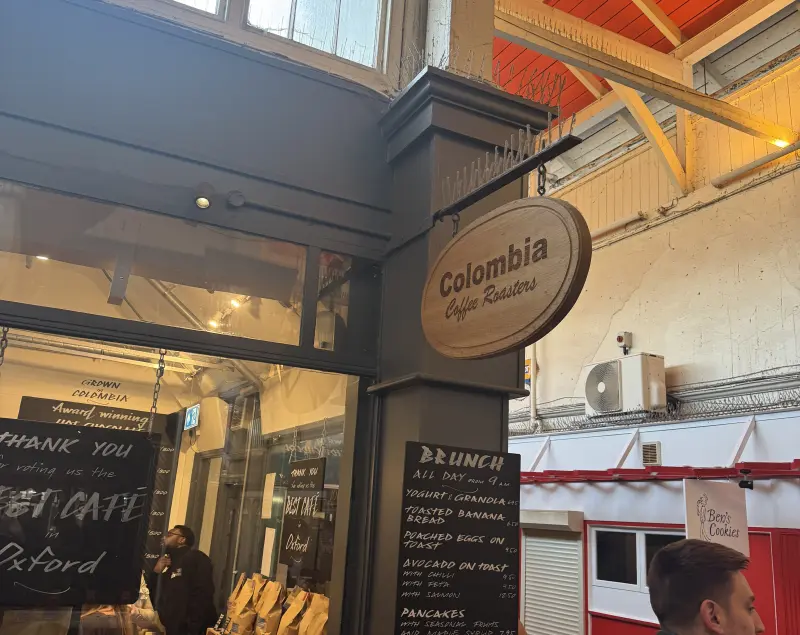
A Taste of China · Again Garments · Alpha Bar · Ben's Cookies · Brothers Café · Brown's Cafe · Cardew & Co · Collector's Corner · Colombia Coffee Roasters · Covered Arts and Framing · Covered Spuds · Crystal Spirit Emporium · David John Butchers · Donburi Inn · Fedele Oxford · Georgina's · Ginger and Spice · Goodies · Gulp Fiction · Hamblin Bread · Il Corno · iScream · James Taylor Photo Art · Jemini Flowers · John Gowing Jewellers · Leonard Jay · Lula's Ethiopian · Moo-Moo's · Next to Nothing · Nothing · Oxford Cheese Company · Oxford Dogs · Oxford Inspired · Oxford Market Barbers · Oxford Souvenirs · Pieminister · Pingui Bags International · Rozana · Sartorelli's Pizza · Sasi's Thai · Soctopus · Sofi de France · Space Store · Sushi Bowl · Taylors Oxford · Teardrop Bar · The Garden of Oxford · The Market Cellar Door · The Market Tap by Tap Social · The Oxford Cobbler · The Oxford Soap Company · The Woolhound · Whey Okay · Wicked Chocolate · Woollen Cosy Life · Y.O.U Oxford.
The painted directory near the High Street entrance is the in-person canonical version and the right thing to consult on the day, since the stall mix turns over.
The atmosphere
The market operates on a rhythm. Early morning belongs to the traders and the regulars. Brown's Cafe and the butchers' stalls are the heartbeat. Mid-morning the tourists arrive. Lunchtime is the peak: Alpha Bar and Sasi's Thai draw queues. By 4pm things quieten, and by 5:30 the shutters are down. Saturday is the busiest day. Sunday opening is relatively recent and not all vendors participate.
The aisles are narrow, the ceiling is low in places, and the light changes through the day as it filters through the glass roof. It's not pretty in a polished, renovated sense, but in a working, lived-in one. The market has survived because it serves a function, not because it performs one.
Find your way around
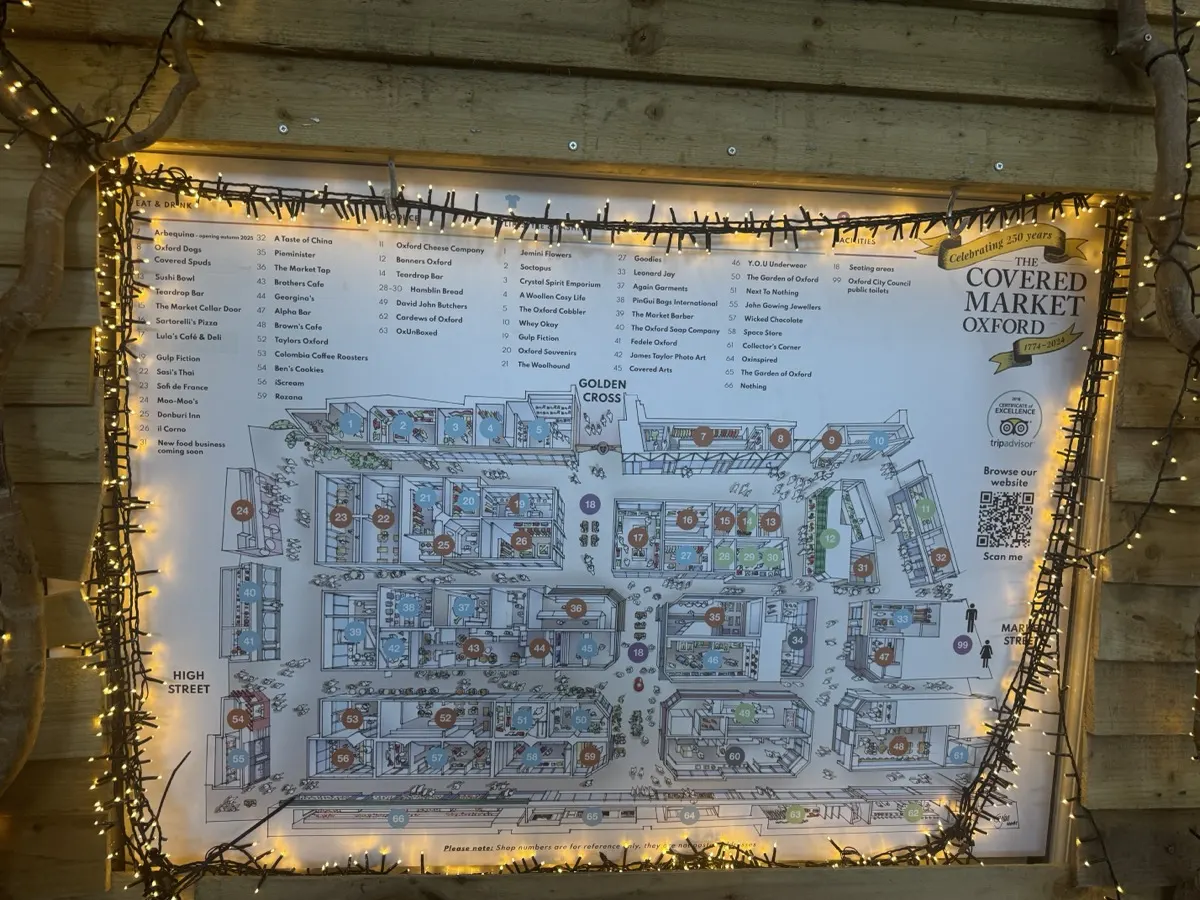
A painted directory hangs near the High Street entrance and is the easiest way to find a specific stall before you wade in. The market is built on four parallel avenues running north–south between Market Street and the High Street, with shorter cross-aisles linking them; the named stalls are clustered by trade rather than spread evenly.
Practical notes
Four entrances from the High Street, three from Market Street, one via Golden Cross from Cornmarket. The Market Street entrance is the least crowded. The market is covered (the clue is in the name) so it works in any weather. Card accepted at most stalls but a few smaller vendors prefer cash. Public toilets available. Pushchair-accessible on the main aisles but tight in the side passages.
Nearby
Within a few minutes' walk