University of Oxford Botanic Garden
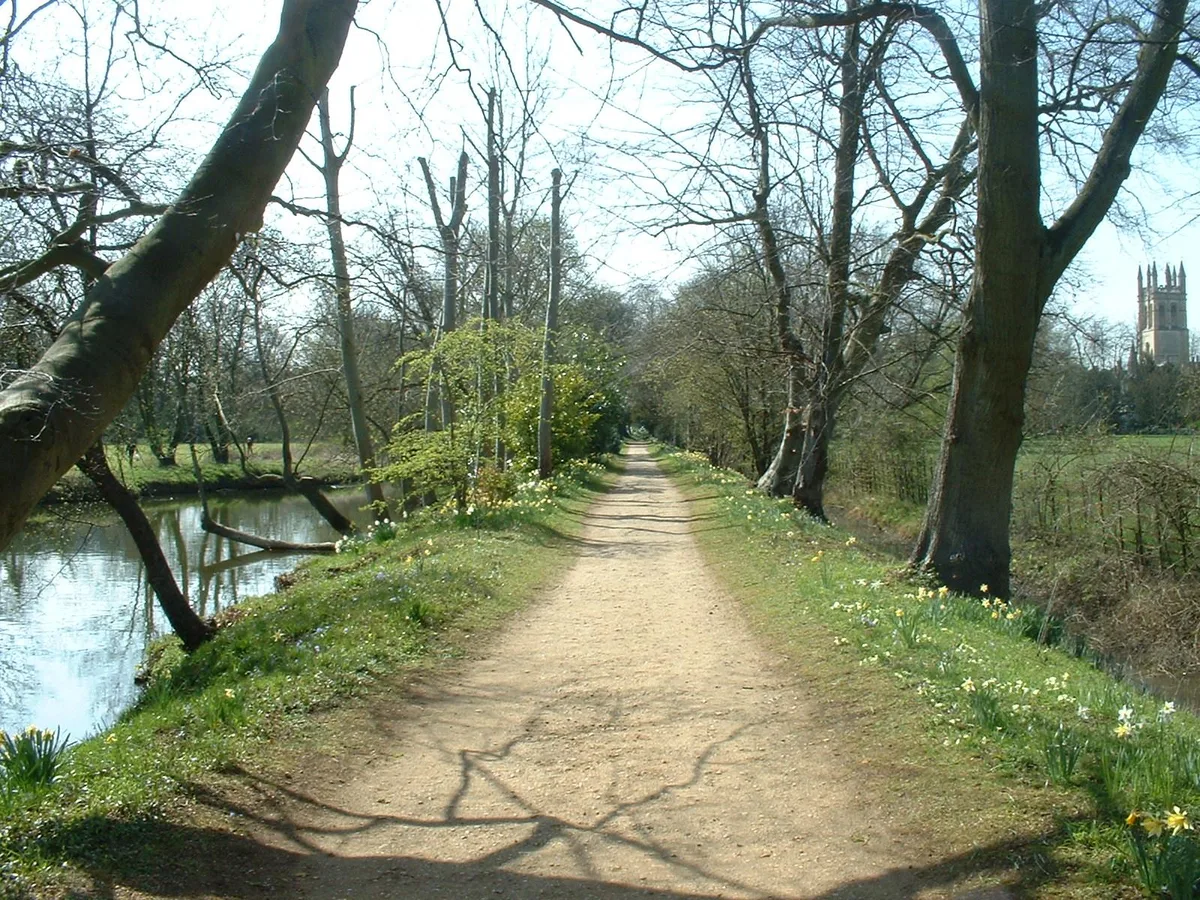
A walled garden beside the Cherwell, begun in 1621 for the study of medicinal plants and billed as the oldest of its kind in Britain.
The address is Rose Lane. Opening times change through the year, so check the official website before you set out. Lyra’s bench and the spot where Tolkien’s pine stood are both inside the garden: see the linked pages below.
Oxford Botanic Garden began in 1621 as a place to grow medicinal plants for study. Wikipedia calls it "the oldest botanic garden in Great Britain", and the garden itself bills it as the UK's oldest. More than 5,000 plant species now grow on 1.8 hectares.
History
The money came from Henry Danvers, 1st Earl of Danby, who gave £5,000 in 1621. The chosen ground lay beside the River Cherwell, in the north-eastern corner of Christ Church Meadow, and was owned by Magdalen College. Jacob Bobart, the first head gardener, put out a printed catalogue of sixteen hundred plants in 1648.
Nicholas Stone designed the Danby Gate, the front entrance, in 1632-33; it is one of three entrances he designed for the garden. The gate is Grade I listed. Statues of Charles I and Charles II stand in its niches, and a bust of the Earl of Danby crowns the central pediment.
What to see
There are three parts: the Walled Garden, the glasshouses, and the lower garden between the wall and the river. The Walled Garden holds the garden's oldest tree, an English yew. In the glasshouses, the tank in the Tropical Lily House dates from 1851, when Professor Charles Daubeny had it built, and is the oldest surviving glasshouse structure. Beyond the wall, the Herbaceous Border dates from 1946 and the 955-square-metre Merton Borders form the biggest single planted area. The national collection of euphorbia has been kept here since 1983. A second site, the Harcourt Arboretum, lies six miles south of Oxford.
Literary Oxford
Writers have returned to the garden often. In the 1860s Charles Dodgson (Lewis Carroll) came repeatedly with the Liddell children, and the waterlily house is visible behind Tenniel's drawing of the croquet-ground. In Evelyn Waugh's Brideshead Revisited, Sebastian Flyte offers to show Charles Ryder "the ivy". J. R. R. Tolkien liked to sit beneath a black pine here; it came down in 2014 after two limbs fell (see Tolkien's Tree). Philip Pullman's His Dark Materials sets one of its parallel-world locations at a bench at the back of the garden (Lyra's bench).
Nearby
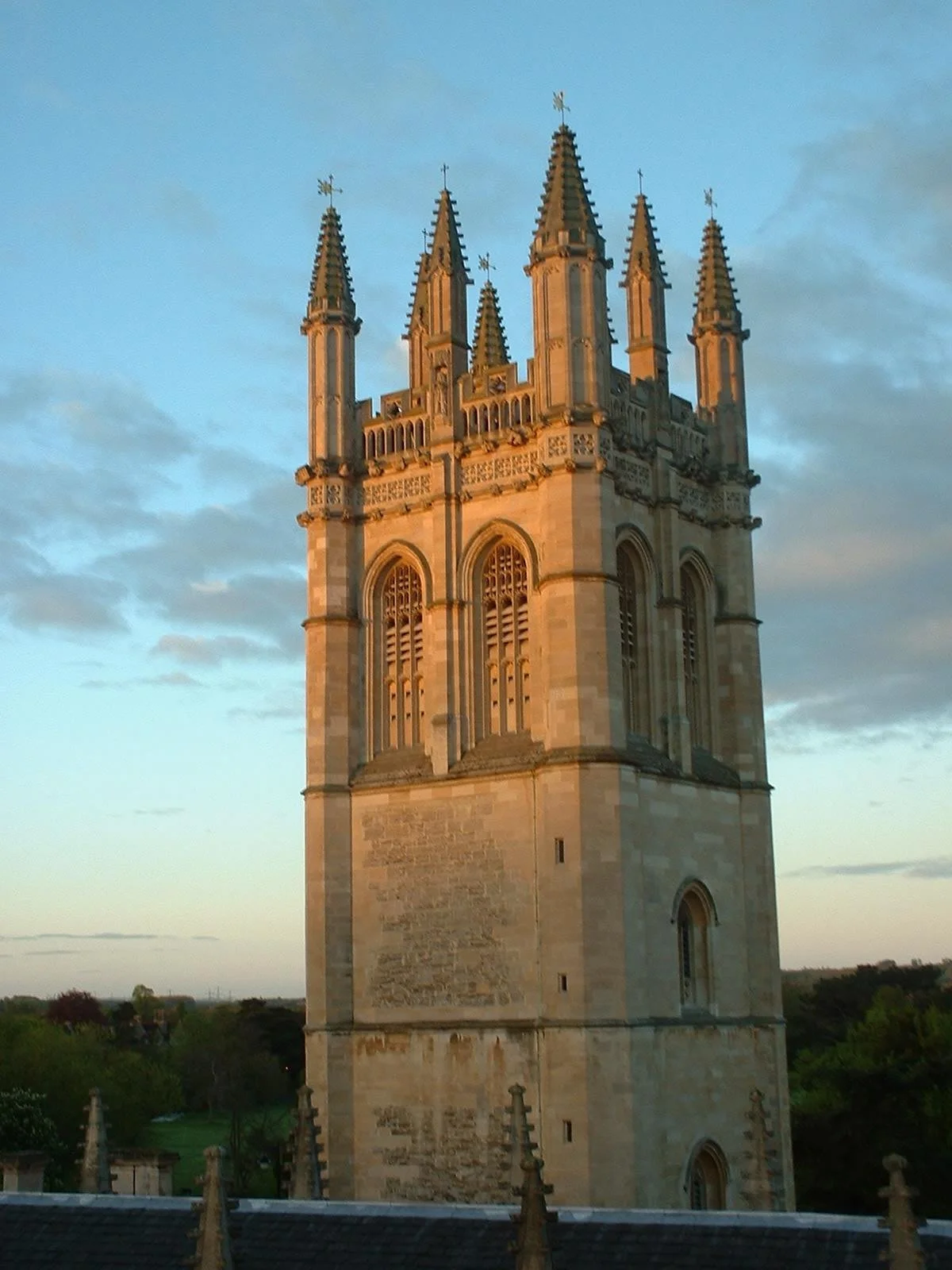
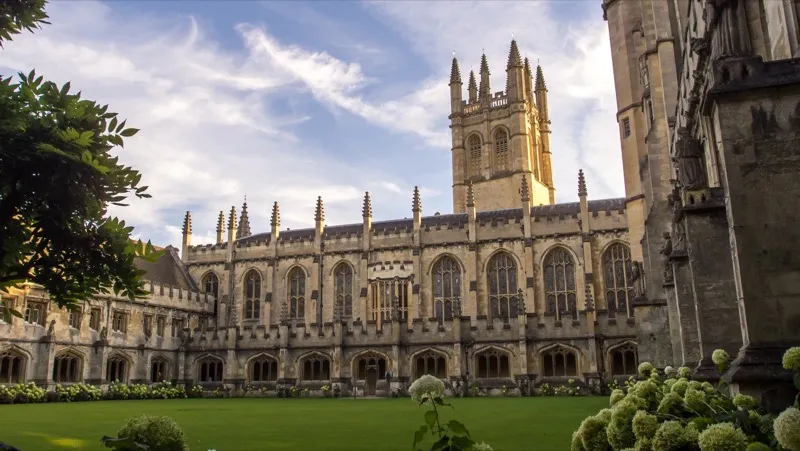
The High Street and Magdalen Tower are both a short walk away.
Nearby
Within a few minutes' walk