Magdalen Bridge
The 18th-century stone bridge over the Cherwell at the east end of the High Street, designed by John Gwynn and the gathering point for May Morning.
On 1 May the bridge is routinely closed, so the crowd for the dawn singing gathers in the High Street. For the river itself, the punting guide covers the Cherwell stretch that starts here.
Magdalen Bridge is the way into Oxford from the east. It crosses the Cherwell, which splits into two channels at this point, and joins the foot of the High Street to The Plain, now a roundabout. The name, and its odd pronunciation, come from the neighbouring Magdalen College.
A crossing since 1004
People have crossed the river here since ancient times. A bridge is first recorded in 1004, probably built of timber trestles or as a drawbridge. A medieval stone successor with 20 arches, about 1,500 feet long, was in place by the 16th century. By the 1770s it could not safely pass two vehicles at once, and when the February 1772 floods collapsed arches on the western side it was beyond repair.
The present bridge
Its replacement is the work of John Gwynn of Shrewsbury, with John Randall building it between 1772 and 1790. It has 11 arches: on each channel, three large semicircular arches flanked by two small ones intended for towpaths, plus a single elliptical arch across the island in the middle that passes water only when the island is flooded. Traffic could use it from late 1778, though the balustrade and the south-western corner were finished in 1782 and 1790. At 27 feet wide it had one carriageway and two pavements.
The tramway era brought a widening in 1882: 20 feet were added on the south side, against the wishes of some University members, and Gwynn's design was kept. Pevsner admired the "good sturdy balusters", which have since been replaced piecemeal as pollution eroded them.
May Morning
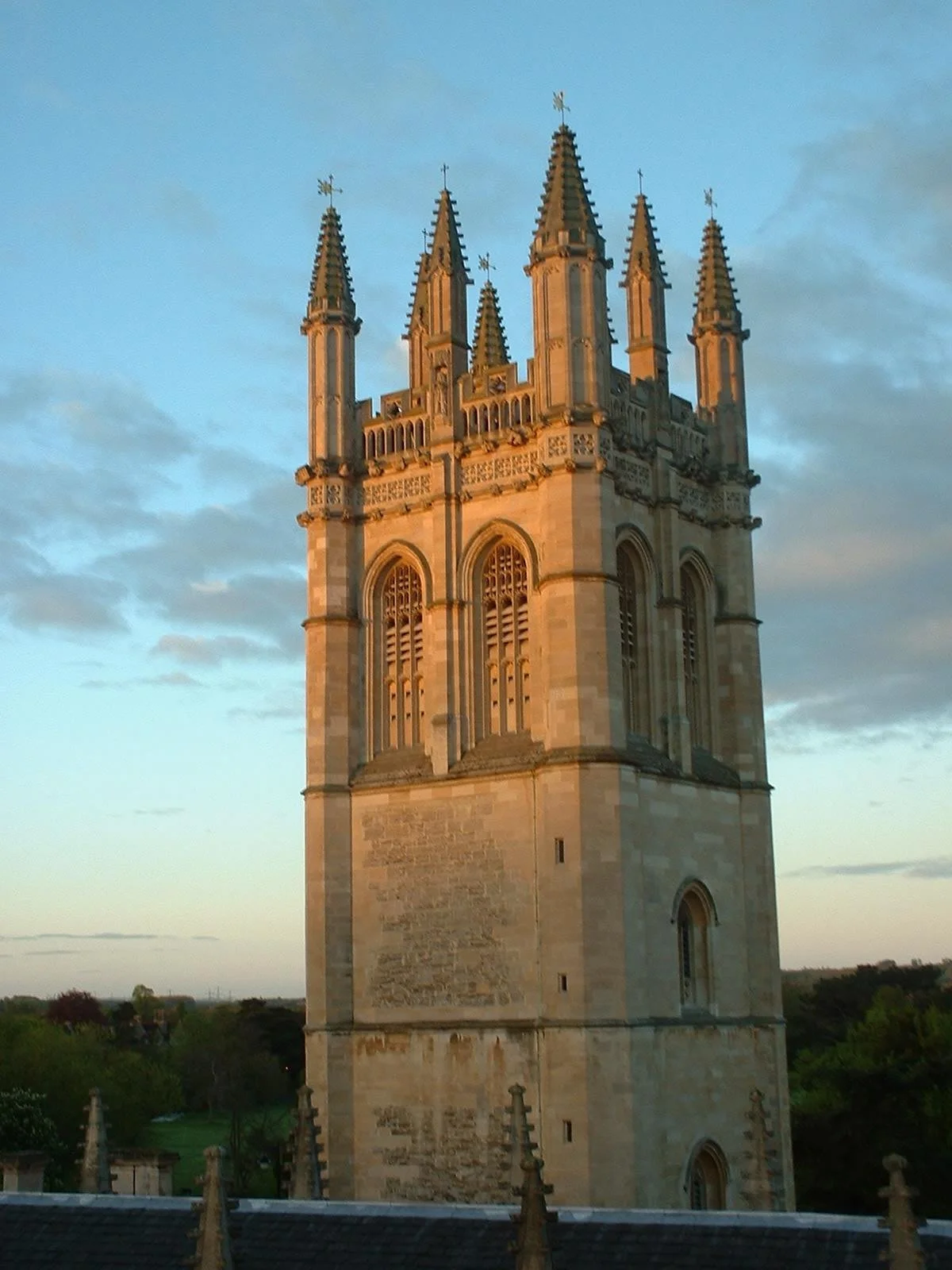
At first light on 1 May the bridge is the centre of Oxford's May Morning crowds. At 6 a.m. the Magdalen choir sing Hymnus Eucharisticus from the top of Magdalen Tower to the people below on the bridge and the High Street, in a tradition that goes back 500 years. Some students have taken to leaping into the Cherwell, whose water can be too low to be safe, and after injuries in some years, the bridge is closed to everyone as a matter of routine each 1 May. See the May Morning guide.
On the water
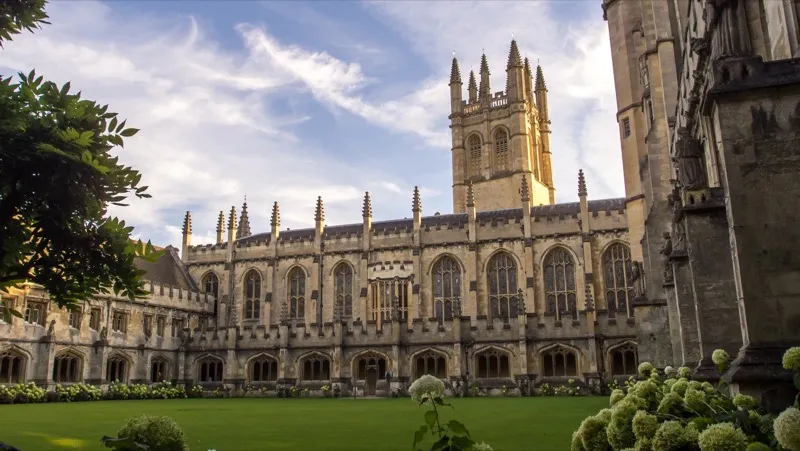
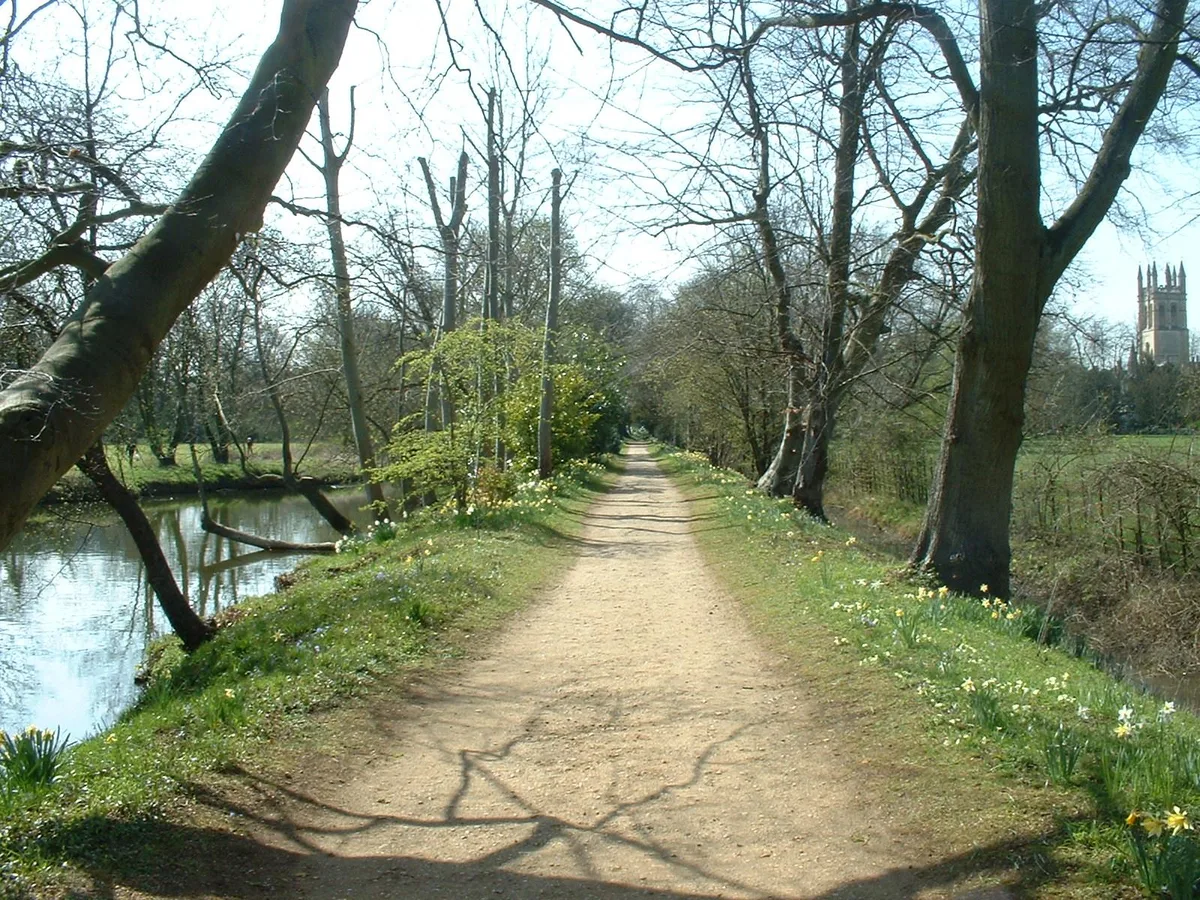
John Betjeman pictured the Cherwell bearing "its leisure puntfuls of the fortunate" beneath Magdalen Bridge. For punting on this river, read the punting guide. The college next to the bridge also borders the river and the Botanic Garden.
In literature
Max Beerbohm's 1911 novel Zuleika Dobson mentions the bridge, and Philip Pullman gives it a brief appearance in The Amber Spyglass, the last book of His Dark Materials.
Nearby
Within a few minutes' walk