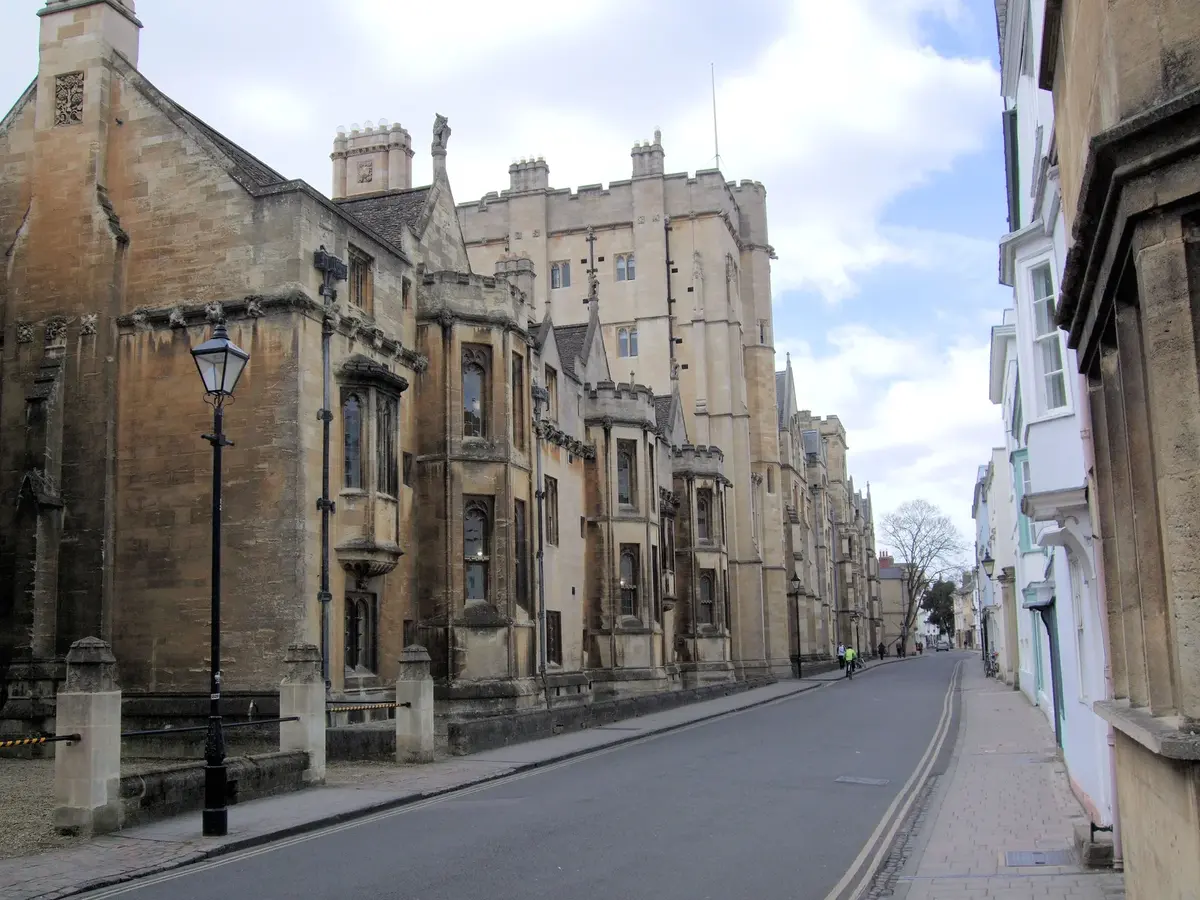
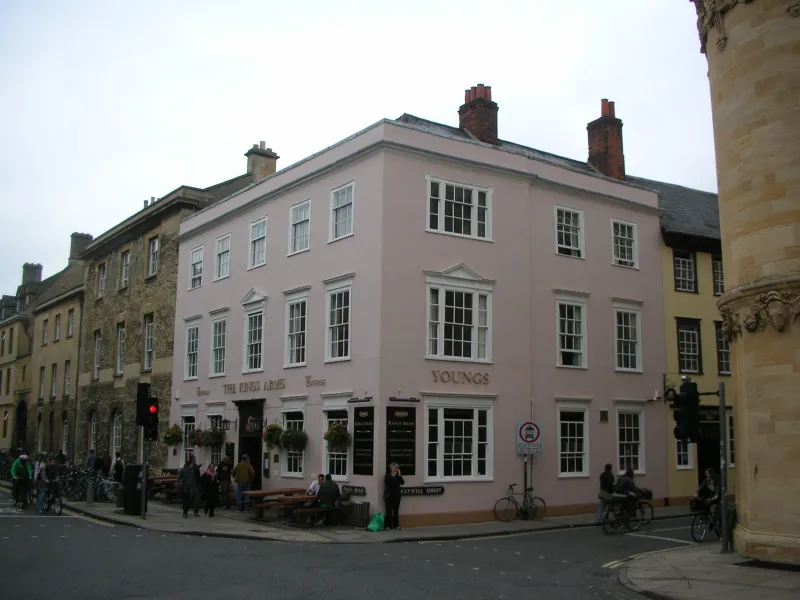
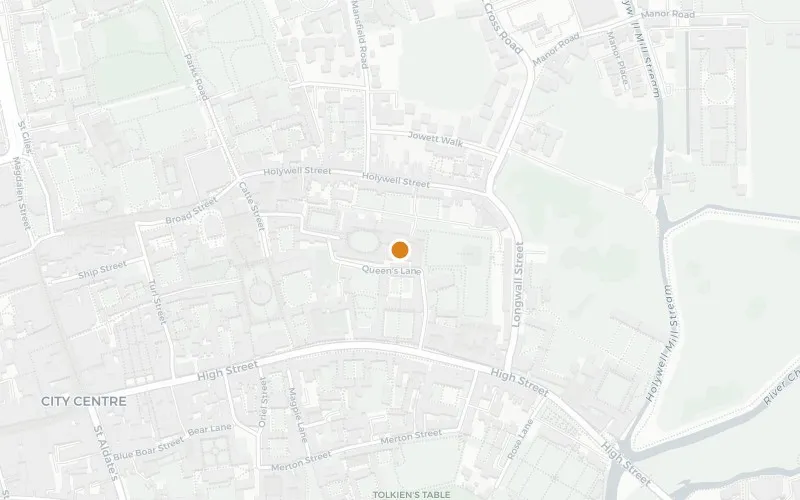
Holywell Street runs east-west from the King's Arms corner — where Broad Street, Catte Street and Parks Road meet — to Longwall Street, sitting just inside the line of the medieval city wall. It is one of central Oxford's quietest streets, an unbroken run of long Jacobean and Georgian cottage frontages on the north side and the wall, chapel and cloister of New College on the south. (New College's main gate is on New College Lane; what fronts Holywell is the college's own boundary.)
The street's set-piece is the Holywell Music Room at number 34, built in 1748 to a design by Dr Thomas Camplin, vice-principal of St Edmund Hall. Wikipedia calls it "said to be the oldest purpose-built music room in Europe" — the hedge is theirs, not ours, but the venue's claim is widely accepted, and it was an important platform for popularising Haydn's music in eighteenth-century England. (Haydn himself never visited — a 1791 trip planned but not made.) The Faculty of Music still programmes concerts here.
Wadham College's gardens adjoin the eastern half of the north side. Toward the western end, a narrow alley called St Helen's Passage leaves Holywell and, after a couple of dog-legs, opens onto the Turf Tavern, a low-roofed pub tucked behind the colleges on the line of the old city ditch.
Sources:
Wikipedia: Holywell Street, Oxford · Wikipedia: Holywell Music Room · OpenStreetMap · Faculty of Music — Holywell Music Room