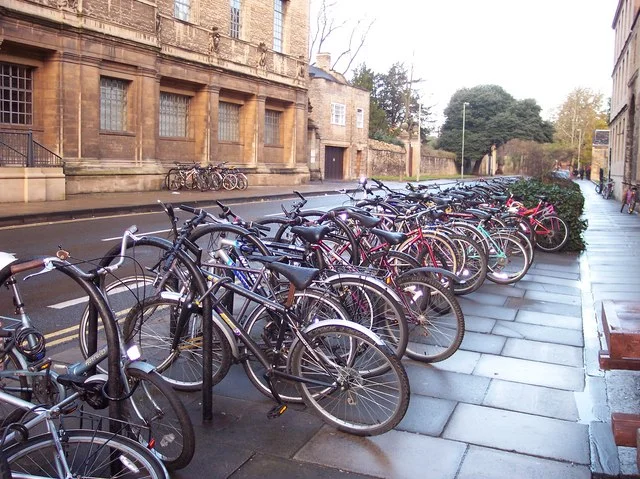
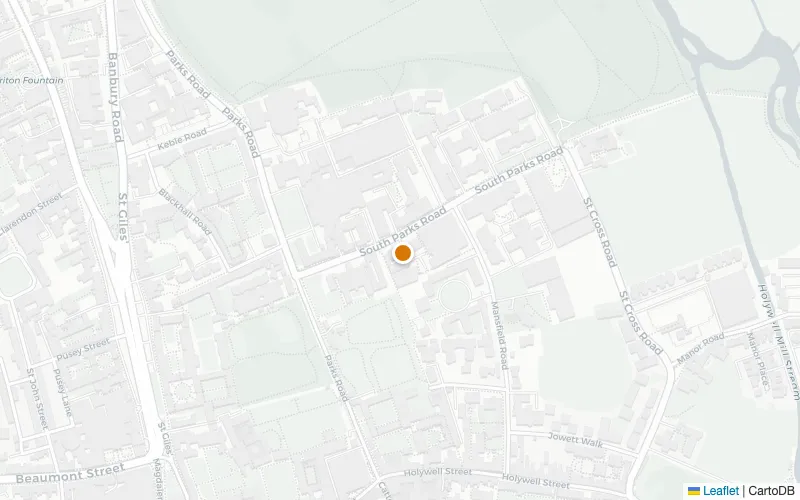
Parks Road runs north from the King's Arms corner — where Broad Street, Holywell Street and Catte Street meet — to the Banbury Road and Norham Gardens at the southern edge of the University Parks. It is short, but it carries the spine of the University's Science Area along its eastern flank.
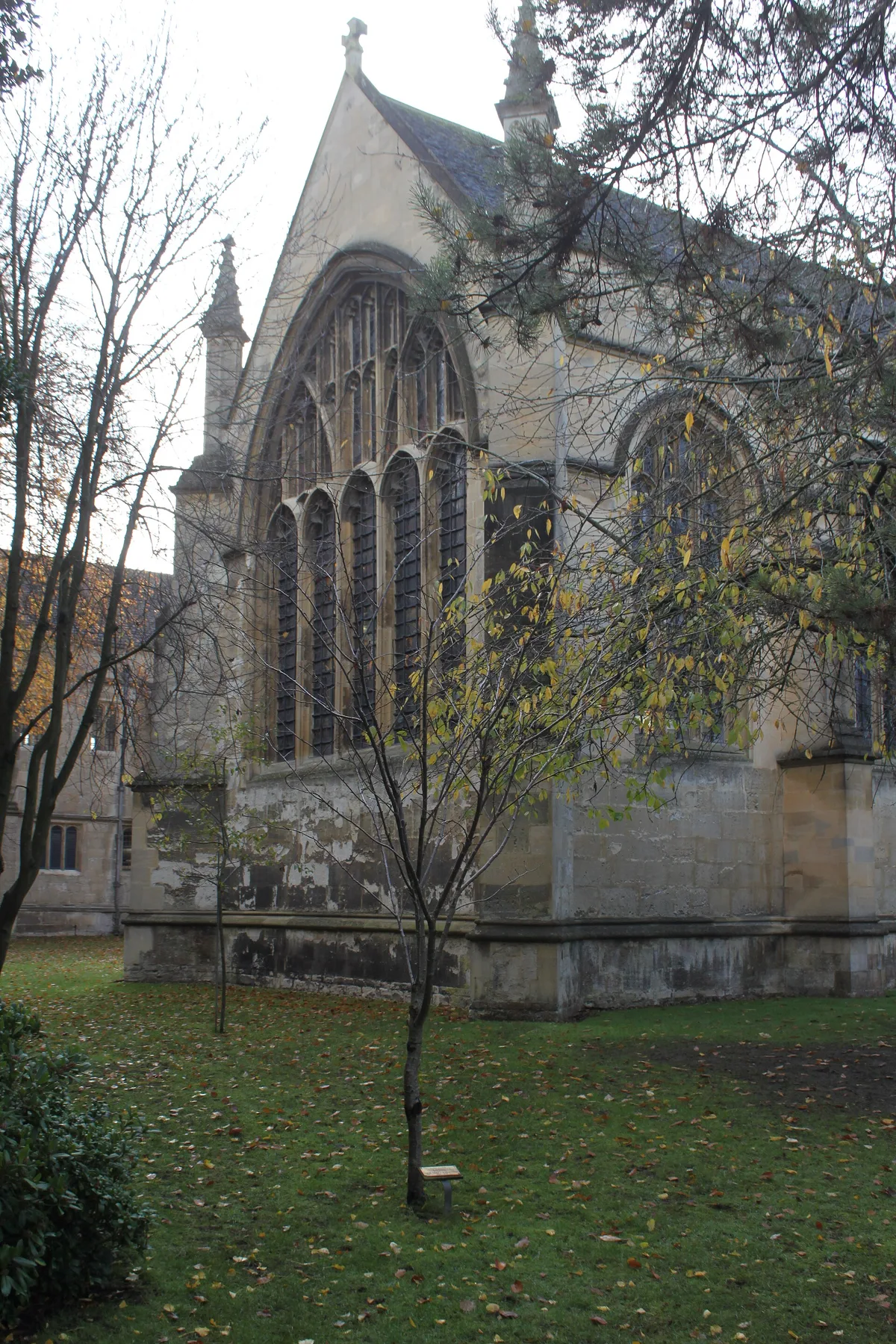
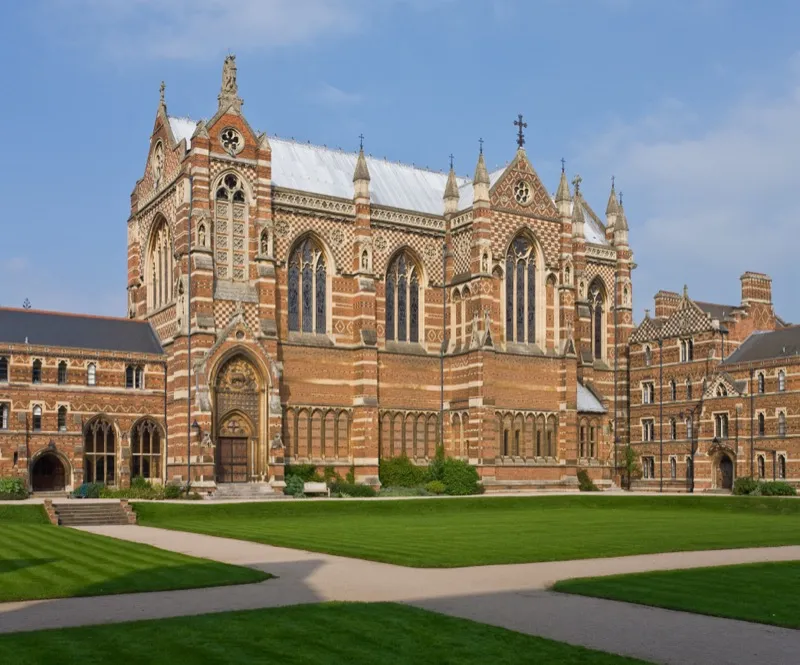
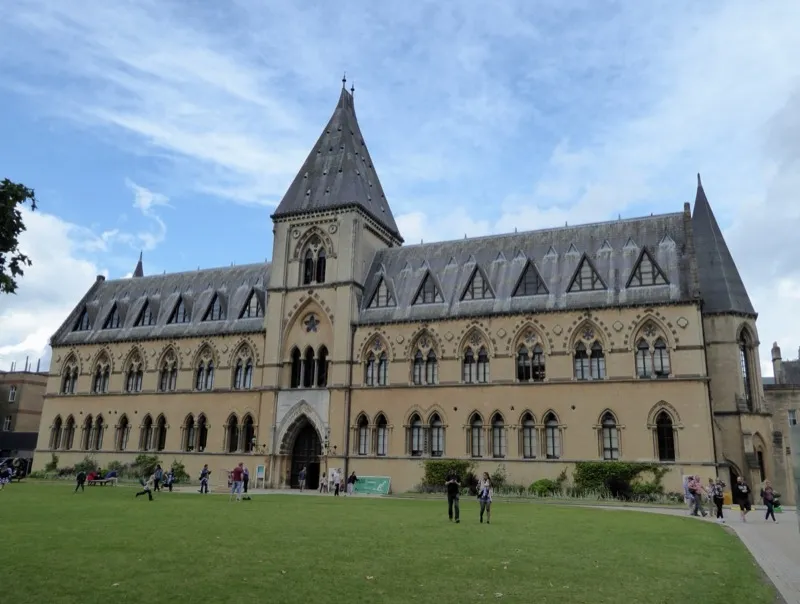
On the west side, Wadham College sits at the south end and Keble College at the north, set back behind William Butterfield's red, blue and white polychrome brickwork (Grade I, opened 1870 — the design was famously called "actively ugly" by Pevsner before history rehabilitated it). On the east side, opposite Keble, stands the Oxford University Museum of Natural History, designed by Thomas Newenham Deane and Benjamin Woodward and completed in 1860, also Grade I. The Pitt Rivers Museum is the adjoining building behind it, built 1885–86 by Deane's son Thomas Manly Deane; public access is through the Natural History Museum.
The rest of the east side is laboratories: the Clarendon Laboratory (physics), the Department of Engineering Science, the Department of Materials, the Radcliffe Science Library. Rhodes House has an entrance further south. The novelist Joyce Cary lived at 12 Parks Road from 1920 until his death in 1957, marked now by a blue plaque. At the top of the road the University Parks open out — 74 acres laid out in 1864, with the River Cherwell forming the eastern boundary.
Sources:
Wikipedia: Parks Road · Wikipedia: Oxford University Museum of Natural History · Wikipedia: Pitt Rivers Museum · Wikipedia: Keble College, Oxford · Wikipedia: University Parks · OpenStreetMap