North Walk, University Parks — Wellingtonias and a record-tall elm
The Parks' northern boundary path leads past a Victorian cluster of giant sequoias and the tallest Caucasian elm in the country — structural, year-round, easy on the legs.
The North Walk is one of six named tree-themed routes through Oxford's University Parks, each curated by the Parks team around a cluster of notable specimens. The North Walk is the structural route — its headline trees are tall, evergreen, and impressive in every season, which makes this the walk to choose if you want a year-round outing rather than a seasonal one.
Distance: about 1 km along the northern boundary path · Time: 30–45 minutes · Best season: any (year-round structural trees) · Free
The trees
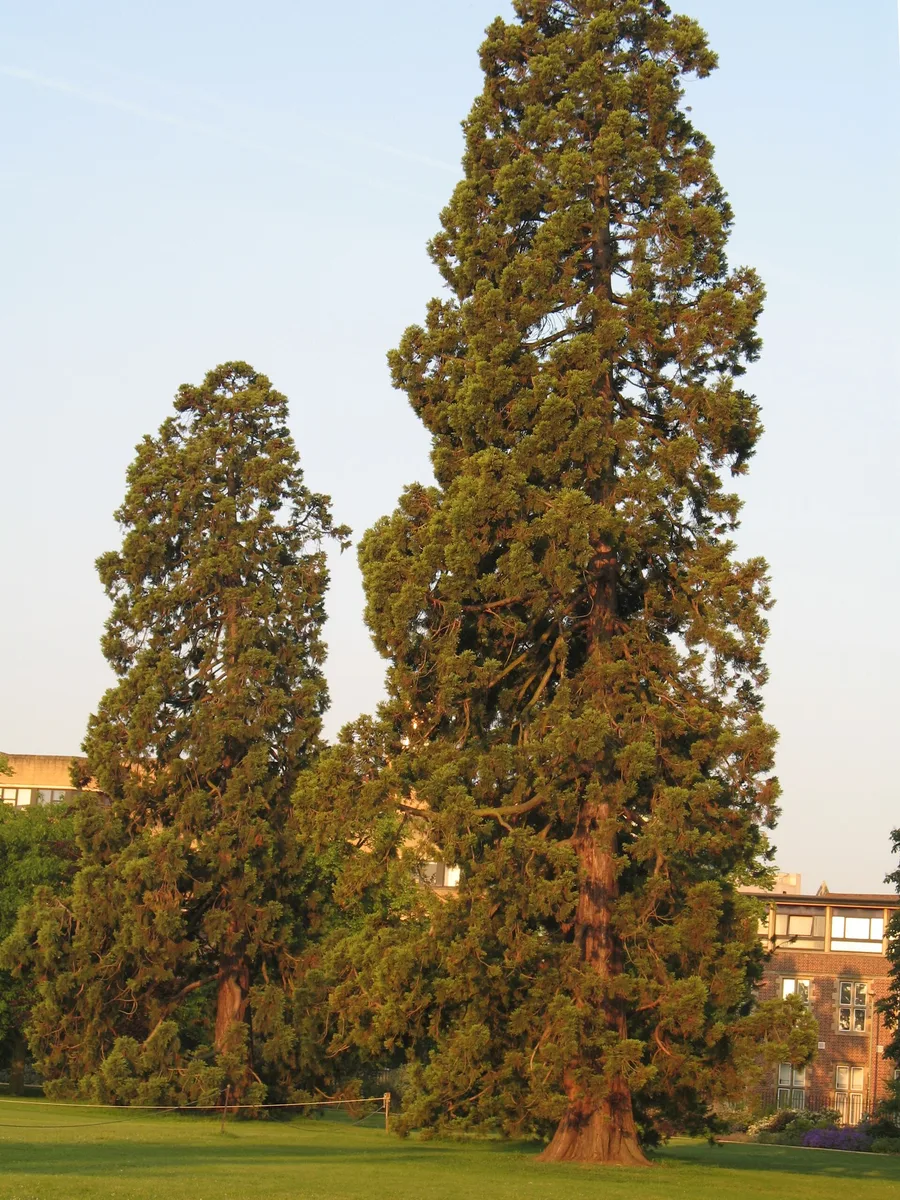
A cluster of Wellingtonias (Sequoiadendron giganteum) — the route's signature. The Parks publish that "the majority of the Parks' majestic cluster of Wellingtonia trees were planted in the late 1880s, with the smallest being added to the group in 1972." The species is the world's largest living organism, and includes some of the oldest living things on Earth — the Parks' cluster is youthful by sequoia standards but already substantial in scale.
The tallest Caucasian elm in Britain — a specimen of Zelkova carpinifolia 'James Gordon', described by the Parks as "the tallest of its type in the country at more than 33m". The species itself has an unusual British history: "almost all mature Caucasian elms in Europe are thought to have originated from the same nursery in East London in 1760." The Parks' tree is therefore part of a small, traceable genetic line — and the record-holder for height within it.
The route
University Parks lies between Parks Road, Banbury Road and the River Cherwell, with the main southern entrance opposite the Pitt Rivers Museum and a northern gate by Linton Road. The North Walk follows the northern boundary path between the two named specimens; the Parks team does not publish a strict route map, but the path that hugs the northern edge of the open lawns gives the best line of sight to both the Wellingtonia cluster and the James Gordon elm.
Practical notes
- Best for: year-round walkers, families, tree enthusiasts, anyone wanting an unhurried 30–45 minute outing
- Best season: any — the Wellingtonias are evergreen and the elm reads as structure in winter as much as in leaf
- Distance: around 1 km along the northern boundary path, longer if combined with the Riverside Walk or Mesopotamia
- Admission: free; the Parks are open from 7:45am, closing around dusk
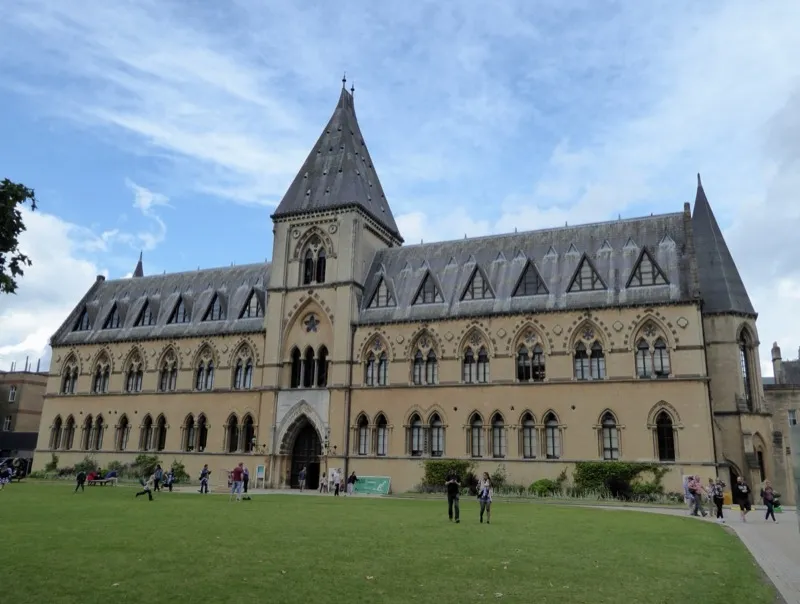
- Companions: combine with the Pitt Rivers Museum or the Natural History Museum for an indoor counterpart
Other Parks walks
- South Walk — Tulip Tree, Indian Bean Tree, Bee-bee Tree (June through late summer)
- Thorn Walk — 30+ hawthorn varieties (May blossom)
- West Walk — Japanese Pagoda Tree planted 1888 (late-summer flowers)
- Lucas Walk — Weeping Beech with self-layering limbs (year-round form)
- Riverside Walk — Scarlet Oak along the Cherwell (autumn)
Nearby
Within a few minutes' walk