University Parks
Oxford University's own parkland beside the Cherwell: laid out in 1864 as a cricket ground and arboretum, with free entry and a tree walk for every season.
Gate times change with the season, so check the official Parks website before you set out. The riverside path through the east of the Parks leads on to Mesopotamia, and parkrun starts at the Tentorium at 9am on Saturdays.
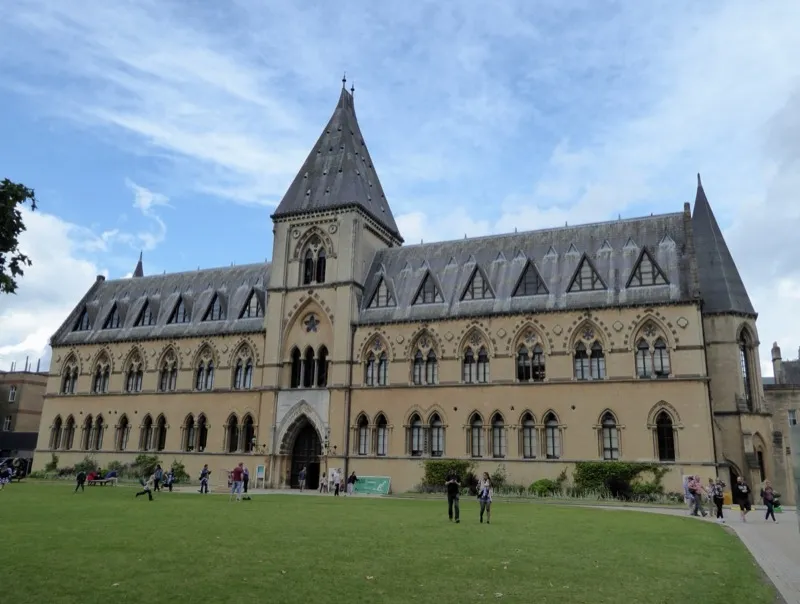
The University Parks, known locally as the Parks, are a large stretch of parkland a little north-east of the city centre. Parks Road runs along the west side and the River Cherwell along the east. To the north lie Norham Gardens and Lady Margaret Hall, and to the south the University's Science Area, close to the Museum of Natural History. Within are gardens, sports fields and a collection of unusual trees, open to the public in the daytime. Admission cannot be charged for entry, so it is free.
History
Some of the ground had long been used for recreation and was part of the University Walks, which Charles II is said to have strolled with his dog in 1685. The ground originally belonged to Merton College. In 1853-54 the University bought 20 acres from Merton, and eventually acquired 91 acres over eleven years. Four acres went to the University Museum, built between 1855 and 1860, and the Science Area later took further land between 1912 and the early 1950s. What remains is roughly 74 acres (30 ha).
The Parks were laid out in 1864 under William Baxter, who became the first superintendent in 1866. Part of the land was kept for sport and the remainder was designed as an arboretum, with the first trees planted in 1865.
Cricket and the grounds
The University Cricket Grounds take up 25 acres, and the pavilion opened in 1881, the year Oxford University Cricket Club made the Parks its home. Thomas G. Jackson, architect of the University's Examination Schools, drew up the pavilion, which has a Long Room. The grounds are also used for other sports, including rugby, hockey, lacrosse, tennis and croquet.
Features
A stand of seven big sequoias dates from about 1888, the same year as the Japanese Pagoda Tree. The pond, with its lilies and tiny island, was dug in 1925. Rainbow Bridge (properly High Bridge) was put up in 1923-24 to give work to the unemployed. Coronation Clump commemorates Elizabeth II's coronation in 1953. Parson's Pleasure, formerly a secluded spot for nude bathing, has closed and is now part of the park.
Walks and places in the Parks
Six named tree walks cover the Parks:
- North Walk: the Wellingtonia cluster and a record-tall elm.
- West Walk: a Japanese Pagoda Tree from 1888.
- South Walk: tulip tree, Indian bean tree and a Korean rarity, best in summer.
- Thorn Walk: over thirty varieties of hawthorn in May blossom.
- Lucas Walk: a self-layering weeping beech.
- Riverside Walk: a scarlet oak above the Cherwell, glowing in October.
Other pages:
- University Parks parkrun: a 5 km event launched on 5 February 2022, held at 9am every Saturday, with the start at the Tentorium at the heart of the grounds.
- Mesopotamia: the narrow island between the two levels of the Cherwell, on the east side of the Parks.
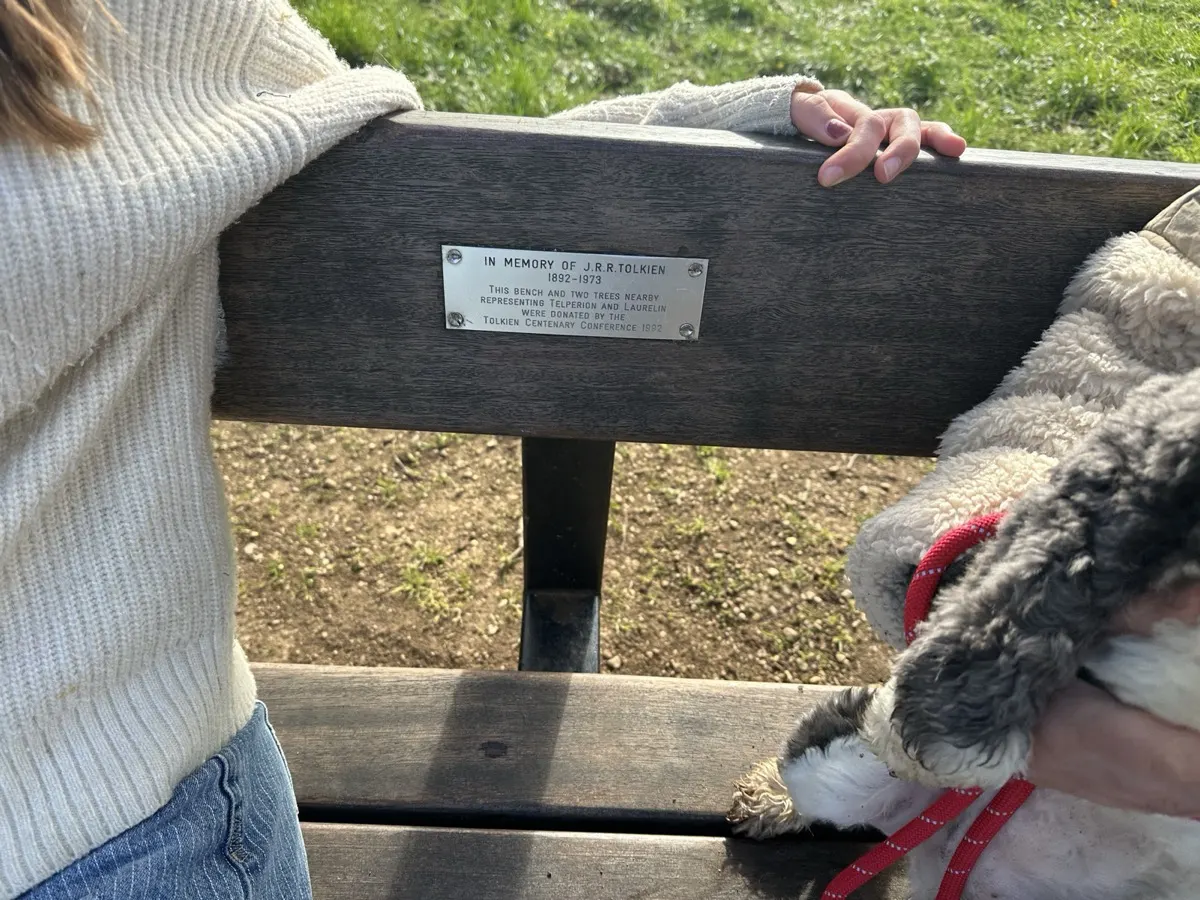
- Tolkien Memorial Bench: a bench on the riverside path, dedicated to J. R. R. Tolkien.
- Parks Road: the street along the western edge.
Nearby
Within a few minutes' walk